

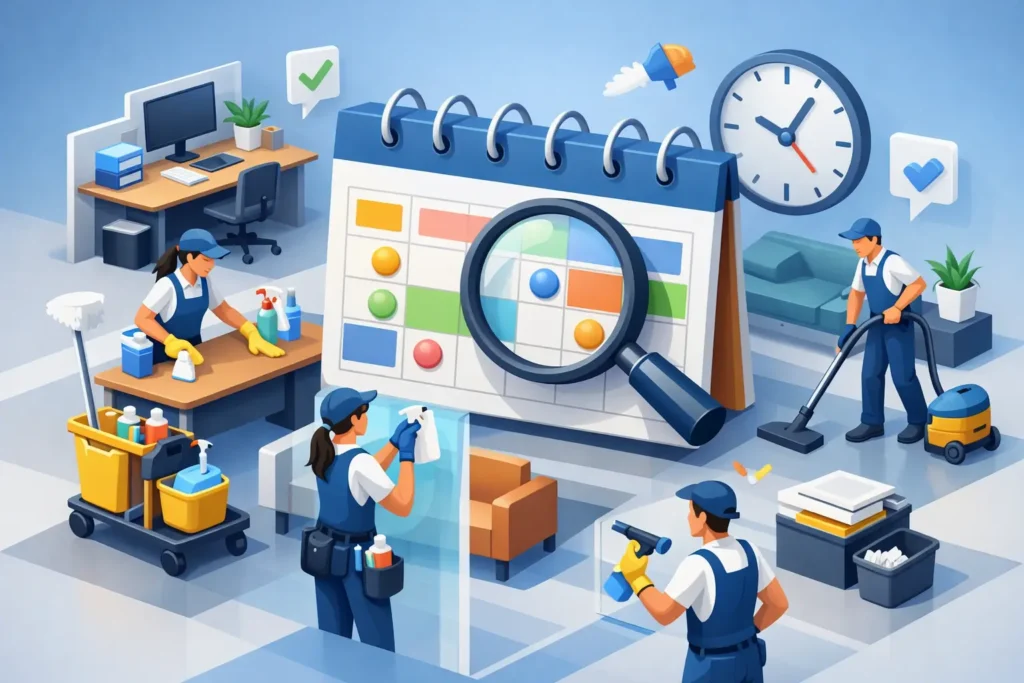
If you are working out how to choose commercial cleaners, the real question is not who can mop floors or empty bins. It is who can deliver the same standard every week without creating extra work for your team. For most businesses, the biggest cost is not a cleaning invoice. It is the time spent chasing missed tasks, fixing presentation issues, and dealing with poor communication.
That is why choosing a commercial cleaner should be treated like choosing an operational partner, not a casual supplier. A cheap quote can look fine on paper, but if standards slip after the first month, the savings disappear quickly. Cleanliness affects staff experience, client perception, safety, and in some sectors, compliance.
How to choose commercial cleaners for long-term results
The best way to assess a cleaning company is to look beyond the sales pitch and focus on how the service is managed. Good commercial cleaning is built on systems. If a provider cannot explain how they maintain consistency, report issues, replace staff, and inspect quality, there is a good chance the service will rely too heavily on individual cleaners doing their best.
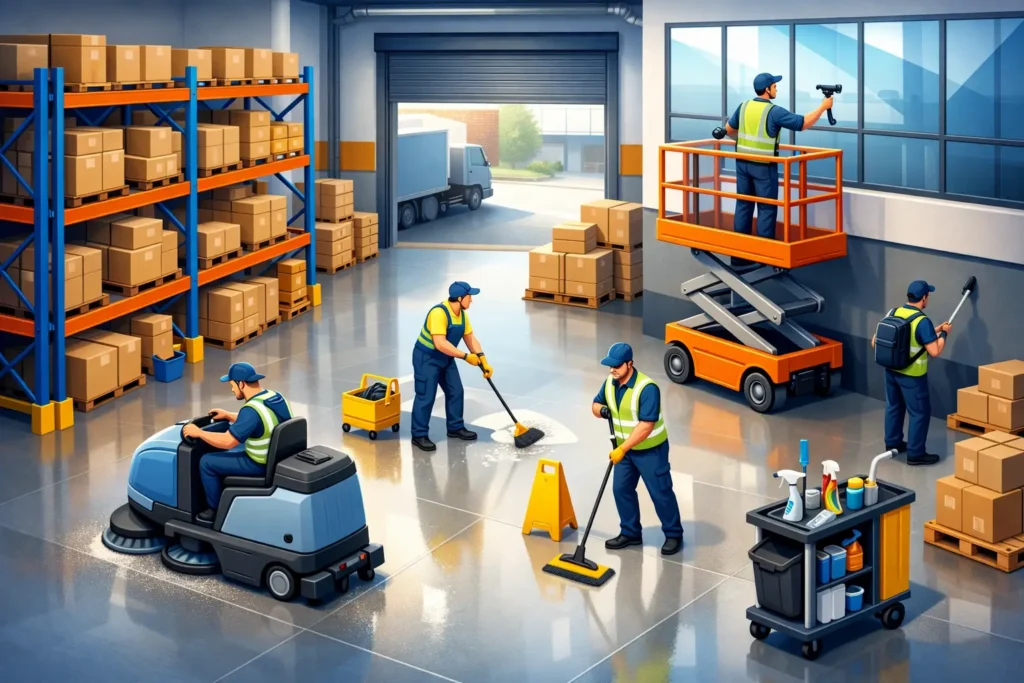
That approach rarely holds up across busy commercial sites. Offices, warehouses, medical centres, retail stores, hospitality venues, and factories all have different requirements, but they all need one thing in common – reliability. The provider should be able to show you how the service stays on track even when staff change, workloads increase, or schedules need adjusting.
Start with your site requirements
Before comparing quotes, get clear on what your business actually needs. A small office with regular weekday traffic will need a different cleaning plan from a warehouse with dust build-up, forklift activity, and shared amenities. A medical clinic will have higher expectations around hygiene and touchpoint cleaning. A restaurant or cafe may need flexible after-hours scheduling and close attention to washrooms, floors, and food-adjacent areas.
This matters because vague scopes lead to vague pricing and inconsistent results. If one provider is pricing for a basic tidy-up and another is pricing for a structured service plan, the cheaper quote is not really cheaper. It is just covering less.
A worthwhile cleaner should ask practical questions about your site. How many staff use the space? What areas have the heaviest traffic? Are there compliance requirements? What cleaning tasks need to happen daily, weekly, or periodically? If the conversation stays at a surface level, that is a warning sign.
Look for a detailed scope, not generic promises
The proposal should define exactly what is included, how often tasks are completed, and when the work will be done. It should also note any exclusions. This protects both sides. You know what standard to expect, and the cleaning company knows what it is accountable for.
Generic terms like comprehensive cleaning or high-quality service sound good, but they do not help when there is a dispute over missed work. Specificity does.
Judge the system behind the cleaner
A common mistake is choosing a business based on the person doing the quote, rather than the system backing the service. Strong operators have processes for onboarding, site checks, issue escalation, communication, and performance monitoring. That is what keeps standards consistent over time.
Ask how quality is checked. Do they conduct regular inspections? Is there photo reporting? How are problems documented and resolved? What happens if your regular cleaner is sick or leaves? These are not small details. They are the difference between a service that runs smoothly and one that constantly needs your attention.
If a company offers guarantees, look closely at what they actually mean. A replacement guarantee, for example, is useful if it is backed by a clear timeframe and a real process. A service guarantee is only valuable if there is accountability behind it.
Reliability is a commercial issue, not just a cleaning issue
When cleaners fail to show up or standards drop, the impact spreads quickly. Staff notice it, customers notice it, and managers end up stepping into tasks that should not be on their list. In industrial and high-traffic environments, poor cleaning can also affect safety and presentation standards.
That is why reliable attendance, clear communication, and performance tracking should carry as much weight as price. In many cases, they matter more.
Compare pricing properly
Price always matters, but it should be assessed in context. The lowest quote can be attractive, especially when budgets are under pressure, but low pricing often means one of three things. The scope is light, the labour time is unrealistic, or the service model is not sustainable.
None of those outcomes help your business.
A better way to compare providers is to ask what is included in the cost and what support comes with it. Are consumables included or charged separately? Is supervision built in? Are site inspections part of the service? Is there a clear process for urgent issues? Once you compare like for like, the difference between quotes often becomes easier to understand.
There is also a trade-off between flexibility and cost. A highly customised schedule with out-of-hours access, periodic deep cleans, and multiple site requirements may cost more, but it can save internal time and improve results. Cheap cleaning that needs constant follow-up is rarely efficient.
Industry experience matters, but only if it is relevant
Experience is useful when it matches your environment. A cleaner who mainly services small offices may not be the right fit for a warehouse, factory, or medical setting. Different sites create different cleaning pressures, from dust and grease to foot traffic, washroom usage, and hygiene requirements.
Ask what similar sites they currently service and what challenges they typically manage there. The answer should sound practical, not rehearsed. You want evidence that they understand the pace, risks, and expectations of your type of workplace.
For businesses across South-East Melbourne, this can be especially important in industrial and mixed-use areas where sites vary significantly from one street to the next. A provider that understands both corporate and operational environments is usually better equipped to build a workable service plan.
Communication should be easy and direct
Poor communication is one of the fastest ways a cleaning contract goes off track. If you have to chase updates, repeat instructions, or wonder whether issues have been actioned, the service is already costing more than it should.
A good commercial cleaner makes communication simple. You should know who to contact, how issues are escalated, and how quickly responses are handled. There should also be a clear review process, especially in the early stages of a contract when small adjustments are normal.
This is where structured providers stand out. They do not rely on ad hoc messages and memory. They use schedules, checklists, inspections, and reporting to keep the service aligned with your expectations.
What to ask before you sign
The right questions usually reveal more than the quote itself. Ask who will manage your site, how replacements are handled, how quality is checked, and how often performance is reviewed. Ask whether staff are trained, insured, and police checked. Ask how the scope can be adjusted if your site changes.
You should also ask how problems are fixed when they happen, because even good providers run into issues from time to time. What matters is whether they have a system to respond quickly and prevent a repeat.
If the answers are vague, overly sales-focused, or inconsistent, take that seriously. Strong cleaning companies are usually very clear about how they operate because their systems are part of the value they provide.
Signs you are choosing well
When you are speaking to the right provider, the process feels structured. They ask useful questions, inspect the site properly, explain the scope in plain language, and set realistic expectations. They do not promise everything to everyone. They explain what will work, what may need adjustment, and where the trade-offs sit.
That is usually a better sign than an overly polished pitch. Commercial cleaning works best when it is practical, accountable, and tailored to how your business actually runs.
For example, a performance-driven provider like NovaOne Property Services focuses on the systems behind delivery – scheduled cleaning plans, regular inspections, daily photo reporting, and fast replacement support when staffing changes. That kind of structure is what helps businesses avoid the usual frustrations that come with inconsistent service.
The cleaner you choose should reduce workload, not add to it. They should protect your standards without needing constant supervision. And they should give you confidence that the job will still be done properly six months from now, not just in the first two weeks.
If you want to know how to choose commercial cleaners, start by looking past the quote and into the operating model. A dependable service is not built on promises. It is built on process, accountability, and the ability to deliver the same result consistently when your business needs it most.