



A warehouse floor can look manageable from the doorway, then turn into a risk register the moment cleaning starts. Oil near loading bays, shrink wrap around pallets, dust on high ledges, blind corners with forklift traffic – this is not the kind of site where a mop and good intentions are enough. If you are working out how to clean warehouses safely, the starting point is not speed. It is control.
Warehouse cleaning has to protect people first, then support productivity. A clean site matters for presentation, stock protection and compliance, but the method matters just as much as the result. The wrong process can create slip hazards, interrupt picking and dispatch, damage equipment or put cleaners in the path of moving plant.
How to clean warehouses safely starts with traffic and risk
Before any cleaning begins, the site needs a clear view of movement. Warehouses are dynamic spaces, and the risks change by zone. A packing area, a high-rack storage aisle and a loading dock should not be treated the same way because they do not carry the same hazards.
Start by identifying where pedestrians, forklifts, pallet jacks and delivery vehicles move through the day. Then map cleaning around those patterns. In many cases, the safest option is to clean in stages outside peak operating windows, rather than trying to cover the whole facility at once. This reduces disruption and lowers the chance of a cleaner stepping into active traffic or leaving wet surfaces where staff are working to deadlines.
A proper risk check should also cover floor condition, spill types, electrical points, machinery, battery charging stations and storage areas containing chemicals or fine dust. Warehouses often accumulate hazards gradually, so assumptions are where problems start. What looked like ordinary dirt may actually be leaked hydraulic fluid. What seems like routine dust may require different controls if it is concentrated around manufacturing or packaging processes.
Match the cleaning method to the warehouse environment
There is no single warehouse cleaning method that suits every site. The right approach depends on floor type, contamination level, operating hours and the type of goods being stored.
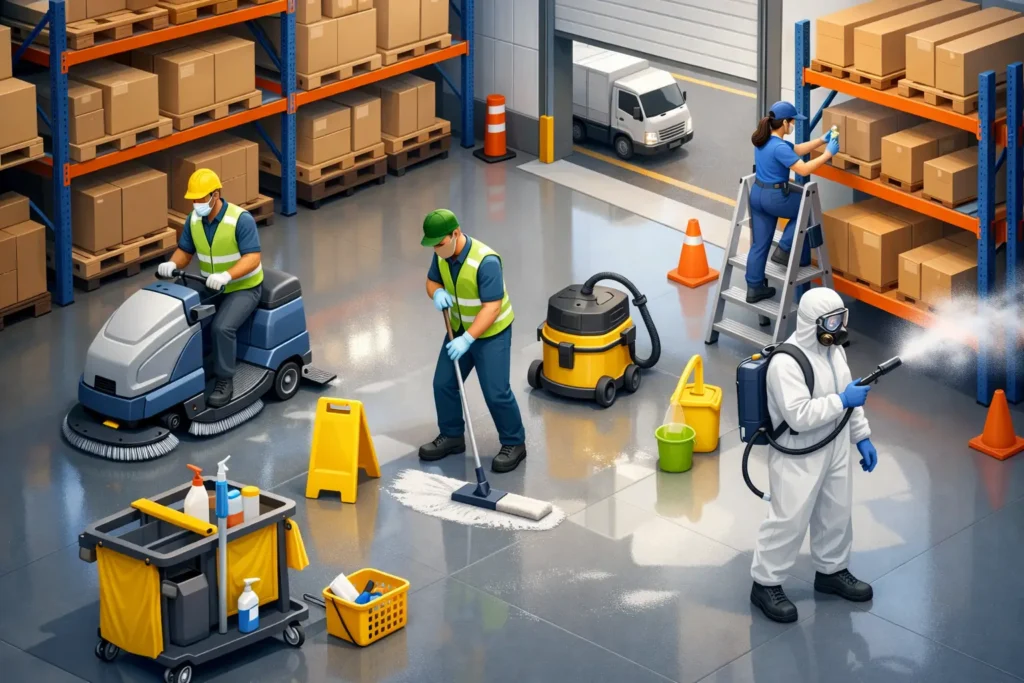
For general floor maintenance, dry debris removal usually comes first. That may involve sweeping, vacuuming or using an industrial scrubber with dust control, depending on the surface and the amount of loose material. Dry cleaning first matters because pushing water across dust, cardboard fibres or pallet fragments usually creates more mess, not less.
For hard floors, mechanical scrubbing can be effective, but only if the machine suits the space. Large ride-on equipment may improve efficiency in wide open zones, yet be a poor fit for tight aisles or mixed-traffic areas. Smaller equipment takes longer, but can reduce collision risks and allow more controlled cleaning around racking and stock.
The same principle applies to chemicals. Stronger is not always better. The product needs to match the soil type and the floor finish, and staff need to know dwell times, dilution rates and rinse requirements. Overuse can leave residues that increase slip risk or degrade surfaces over time.
Control slips, trips and plant interaction
Most warehouse cleaning incidents are not dramatic. They are the kind that happen in seconds – a person turns a corner into a freshly mopped patch, a power lead crosses a walkway, a cleaner bends to collect wrapping near a reversing forklift. Safe cleaning depends on reducing these ordinary but serious risks.
Wet floor management is a big part of that. If a section must be cleaned while operations continue, isolate the area properly and keep the cleaned zone small enough to control. Signage helps, but signs alone are not a safety system. Physical separation, timing and communication with site supervisors are what make the difference.
Trip hazards also need constant attention. During cleaning, that includes hoses, leads, bins, machines left unattended and rubbish pulled from hidden corners. In busy sites, cleaners should work in a sequence that removes hazards as they go, rather than creating temporary clutter that others have to navigate.
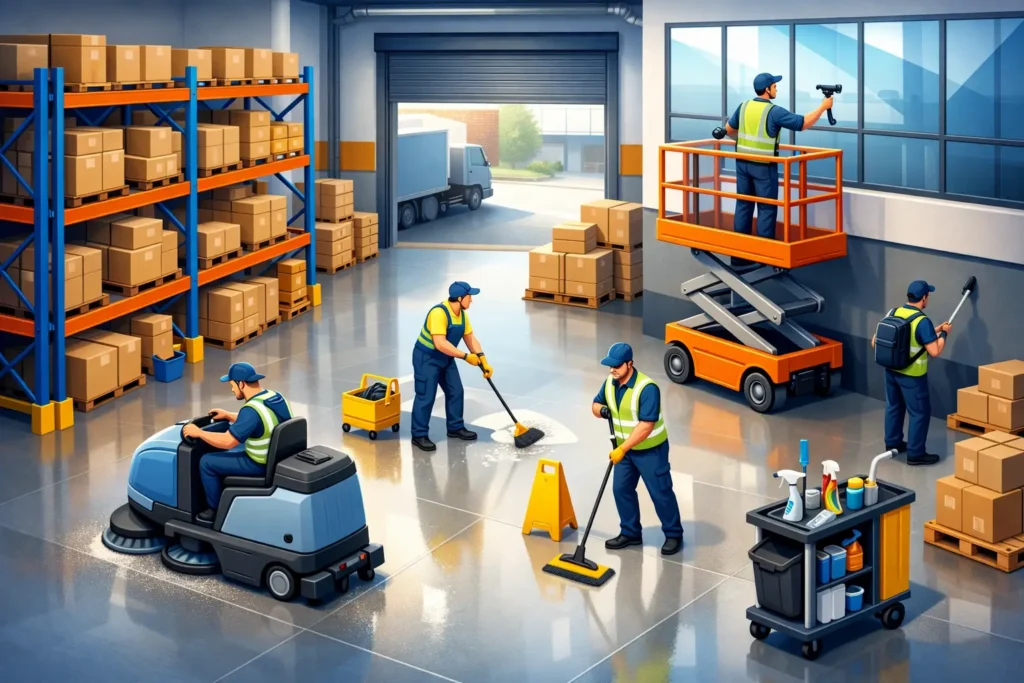
Plant interaction requires even tighter discipline. Cleaners should never rely on forklift operators noticing them in time. High-vis clothing, designated exclusion zones and agreed cleaning windows are basic controls, but the strongest protection is a site process that keeps cleaning activity out of active plant lanes wherever possible.
High dust, high surfaces and hard-to-reach areas
Dust is more than a presentation issue in warehouses. It affects air quality, settles on stock, shortens the life of equipment and, in some environments, can contribute to fire or contamination risks. That is why any serious plan for how to clean warehouses safely needs to include overhead and hard-to-reach areas, not just the floor.
The challenge is that high cleaning introduces a different level of risk. Using ladders in operational warehouse areas is often a poor option, especially near traffic routes or racking. In many cases, elevated work platforms or extension tools provide better control, provided operators are trained and the work zone is isolated.
Timing matters here as well. High dusting should not happen while sensitive stock is exposed below, and it should not be rushed between regular warehouse tasks. The safest method is usually scheduled work during low-activity periods, with the area below cleared or protected before cleaning starts.
It also pays to be realistic about frequency. Some sites need monthly high-level cleaning. Others may need it less often but require more frequent attention around vents, beams, sprinkler lines or extraction points. The right schedule comes from site conditions, not guesswork.
Chemical safety and spill response
Warehouse cleaning often involves degreasers, sanitisers and specialised products for workshop or loading areas. Used correctly, these products improve cleaning outcomes. Used poorly, they create exposure risks for cleaners and site staff.
Every product on site should be clearly labelled, stored correctly and handled according to its safety directions. Staff should know what personal protective equipment is required and when ventilation matters. This sounds basic, but chemical shortcuts are common in high-pressure environments, especially when teams are trying to clean quickly between shifts.
Spill response is another area where planning matters more than improvisation. A spill involving water, oil, chemicals or damaged stock should trigger the right response based on the substance, location and surrounding traffic. Some spills can be cleaned as part of routine operations. Others need containment, area isolation and escalation before anyone starts wiping or hosing down the floor.
For warehouse managers, this is where a structured cleaning partner adds value. Clear procedures, trained staff and consistent reporting reduce the chance that one spill becomes a wider safety problem.
Build a cleaning schedule around operations
The safest warehouse cleaning plan is one people can actually follow. If the schedule ignores dispatch times, shift changes, deliveries or production demands, it will break down under pressure.
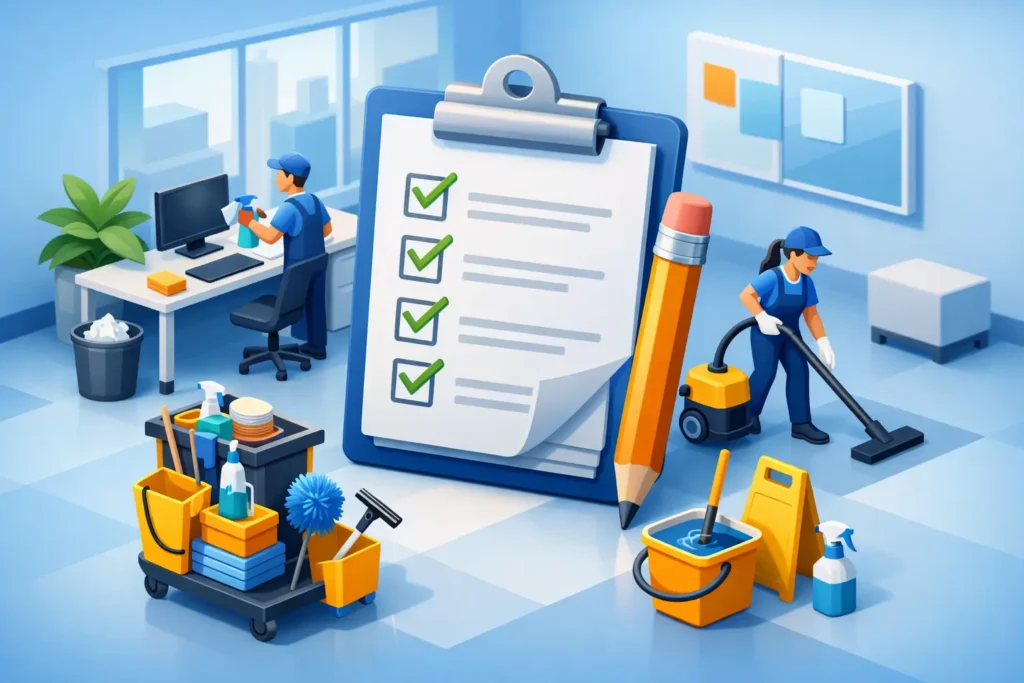
A practical schedule separates daily, weekly and periodic tasks. Daily work might cover entry points, amenities, high-traffic aisles, rubbish removal and spot cleaning of spills. Weekly tasks may include machine scrubbing, dock cleaning and more detailed dust removal. Periodic tasks often cover high cleaning, deep floor treatment and less accessible zones behind stored goods or equipment.
This staged approach helps maintain standards without overloading the site. It also makes accountability easier. When tasks are defined by area, frequency and method, it is easier to spot gaps, fix recurring issues and keep cleaning aligned with site risks.
That is particularly useful in larger warehouses and multi-use industrial facilities across South-East Melbourne, where one building can include storage, packing, amenities and office areas under the same roof. Different zones need different controls, and a generic cleaning routine usually falls short.
Training, supervision and quality control matter more than promises
Safe warehouse cleaning is not just about having the right tools. It depends on whether the people on site know the environment, follow procedure and communicate clearly when conditions change.
Training should cover equipment use, chemical handling, manual handling, site traffic awareness and emergency procedures. Beyond that, cleaners need site-specific induction. Every warehouse has its own pressure points, from after-hours access requirements to areas where stock sensitivity or machinery risk changes the cleaning method.
Supervision matters because standards drift when nobody is checking. Regular inspections, photo reporting and clear issue tracking help confirm that safety controls are being followed, not just assumed. This is where many businesses get frustrated with inconsistent providers. A missed clean is obvious. A missed safety step is often invisible until something goes wrong.
For that reason, reliability is not a soft benefit. It is part of risk control. A cleaning team that turns up on time, follows scope and communicates properly reduces management effort and helps maintain a safer operation overall.
If you are reviewing your current warehouse cleaning process, the most useful question is not whether the floor looks clean at the end of the shift. It is whether the cleaning method supports safety, compliance and workflow at the same time. When those three line up, the site runs better – and stays that way.