

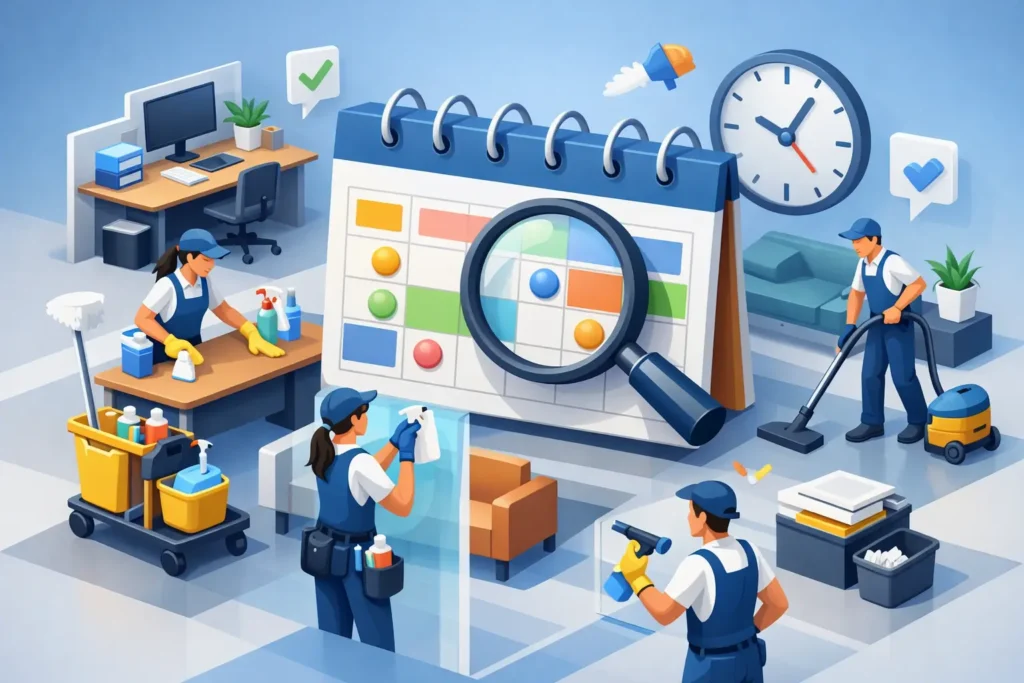
If your site looks tidy but still feels neglected, that is usually the point where people start asking what is included in a deep clean. Routine cleaning keeps things presentable. A deep clean deals with the grime, build-up and overlooked areas that standard schedules often do not fully address.
For commercial sites, that difference matters. In an office, it affects presentation and staff comfort. In a medical, retail, hospitality or industrial setting, it can also affect hygiene standards, customer perception and day-to-day operations. Deep cleaning is not just “more cleaning”. It is targeted, detailed work designed to reset the condition of a space.
What is included in a deep clean for a commercial site?
The short answer is this: a deep clean covers the high-touch, high-use and hard-to-reach areas that sit outside basic daily or weekly cleaning. It is more detailed than a regular service and usually more tailored to the type of premises.
That means there is no single checklist that suits every business. A warehouse in Dandenong South will not need the same treatment as a medical clinic in Berwick or a café in Frankston. The scope depends on the layout, traffic levels, industry requirements and how long it has been since the site had a proper reset.
In most commercial environments, a deep clean includes detailed work across floors, bathrooms, kitchens, touchpoints, fixtures, surfaces and neglected corners. It may also include steam cleaning, high dusting, wall spot cleaning, internal glass, vents and sanitisation of shared areas.
The difference between regular cleaning and deep cleaning
Regular cleaning is built around maintenance. It keeps rubbish under control, amenities usable, surfaces wiped down and floors in acceptable condition. That is essential, but it is not designed to remove every layer of built-up soil, grease, scale or dust.
A deep clean is more corrective. It focuses on the areas that slowly decline between standard cleans, especially where dirt accumulates gradually and becomes harder to remove. Think grout discolouration in bathrooms, grease around kitchen surfaces, dust on skirting boards and vents, marks on walls, and floor edges that have not been properly detailed in months.
This is why businesses often book a deep clean before starting a new ongoing contract, after a busy period, before an audit, or when standards have slipped and internal teams are noticing the difference.
What is included in a deep clean by area?
Bathrooms and amenities
Amenities usually need the most attention during a deep clean because they carry heavy daily use and visible hygiene expectations. Standard cleaning may keep them serviceable, but deep cleaning goes further into the detail.
This often includes descaling toilets, urinals, taps and shower areas where relevant, detailed scrubbing of grout and tiled surfaces, cleaning around pipework and behind fittings where accessible, sanitising touchpoints, removing soap residue, and addressing built-up grime around edges and corners. Exhaust vents, partitions, dispensers, skirting and door frames may also be cleaned in more detail than usual.
In commercial bathrooms, the biggest improvement often comes from the parts people notice without consciously naming them – odour reduction, cleaner grout lines, brighter fixtures and less residue around high-contact areas.
Kitchens, breakout spaces and staff rooms
In staff kitchens and shared eating areas, deep cleaning usually targets grease, food residue and bacteria-prone surfaces. Benchtops and sinks are only part of the job.
A proper deep clean may include splashbacks, cupboard fronts, appliance exteriors, microwaves, fridges, handles, tiled surfaces, bins, skirting and floor edges. If the area has seen heavy use, built-up grease around corners and under movable items is often where the real work sits.
The trade-off is time. Deep cleaning these areas properly can be disruptive if they are in constant use, so many businesses schedule it after hours or during quieter periods.
Floors and floor edges
Floors can look acceptable from a distance while still holding a lot of embedded dirt. A deep clean usually means more than a quick vacuum and mop. It may involve machine scrubbing, stain treatment, detailed edge work, grout cleaning or steam cleaning depending on the floor type.
Carpeted areas may need hot water extraction or steam cleaning to remove deep-seated soil, spills and odours. Hard floors may require scrubbing, polishing or degreasing. In warehouses and industrial areas, the focus may be on dust, residue and marks in operational zones rather than cosmetic perfection.
This is one of the clearest examples of where “what is included in a deep clean” depends on the site. The right method for carpet tiles in an office is different from the right method for sealed concrete in a factory.
Desks, touchpoints and shared surfaces
In offices, retail sites and medical settings, shared surfaces carry a lot of use. Deep cleaning usually includes detailed wiping and sanitising of desks, counters, chairs, phones, switches, door handles, rails and other touchpoints.
The practical value here is not just hygiene. It also improves the overall feel of the workplace. Staff and visitors notice when surfaces are free from dust, fingerprints and the dull film that builds up over time.
For some sites, especially those with compliance or infection control concerns, the cleaning method matters just as much as the area being cleaned. Products, dwell times and cross-contamination controls should match the environment.
High dusting and overlooked fixtures
One of the biggest differences between routine and deep cleaning is attention to the areas above eye level and below hand level. High dusting often covers vents, ledges, air-conditioning surrounds, light fittings, tops of cupboards, pipes, beams and signage where accessible.
These spots are easy to ignore during normal service because they are not part of a quick maintenance cycle. Over time, though, they affect presentation and indoor cleanliness. In warehouses, factories and larger commercial sites, dust build-up in these areas can become substantial.
This work needs planning. Access equipment, safety requirements and ceiling height all affect what can reasonably be included.
Internal glass, partitions and walls
Deep cleaning often includes internal glass, partition panels and spot cleaning of walls and doors. Fingerprints, smudges, splash marks and scuffs build up slowly, especially in high-traffic workplaces.
Not every mark will come off without damaging the surface, and that is where realistic expectations matter. A professional deep clean should improve the overall condition significantly, but permanent wear, staining or damaged finishes may need repair rather than cleaning.
What a deep clean usually does not include
This is where confusion often starts. Deep cleaning is detailed, but it is not unlimited. External windows at height, hazardous waste removal, mould remediation, pest control, full restoration works and specialised maintenance are generally separate services unless clearly included in the scope.
The same applies to moving heavy furniture, cleaning inside every cabinet, or treating every stain as if it is fully removable. A strong cleaning provider will be clear about inclusions, exclusions and likely results before the job starts. That matters because vague scopes are one of the main reasons businesses end up disappointed.
When a deep clean makes the most sense
Some businesses treat deep cleaning as a one-off response when standards have slipped. Others use it strategically as part of a broader cleaning plan. Both approaches can work, depending on the site.
A deep clean is often worthwhile before commencing a regular cleaning contract, after fit-outs or renovations, following a change in tenancy, ahead of audits or inspections, after seasonal peaks, or when internal teams are spending too much time chasing avoidable issues. It is also useful when routine cleaning has been inconsistent and the site needs a proper reset.
For high-traffic commercial spaces, waiting too long usually costs more. The heavier the build-up, the more labour, equipment and disruption are involved in bringing the site back to standard.
How to assess deep cleaning quotes properly
If you are comparing providers, do not just ask for a price. Ask how the scope is defined, what equipment is used, whether the work is done in-house or subcontracted, and how quality is checked once the clean is complete.
This matters in commercial environments because the cheapest quote often assumes the lightest scope. On paper, both might say “deep clean”. In practice, one may include detailed amenities, floor treatment and touchpoint sanitisation, while another only allows for a longer version of a standard clean.
The best approach is to look for clarity. A provider should explain what is included in a deep clean for your site, where the limits are, and how the work will be scheduled to minimise disruption.
Why the right deep clean is about outcomes, not just tasks
A good deep clean is not measured by how long the cleaner stayed on site or how many checklist items were ticked off. It is measured by what changed after the work was done. Are the amenities noticeably cleaner? Are staff areas reset to a better standard? Do floors present properly? Has the site moved from acceptable to clearly well maintained?
That outcome-focused approach is especially important for businesses managing multiple priorities. You do not need extra admin, vague promises or a service that looks good for one day and slips straight back. You need a cleaning scope that matches the site, addresses the real problem areas and supports consistent standards going forward.
If you are asking what is included in a deep clean, the better question may be this: what does your site actually need to get back to standard? Once that is clear, the right scope becomes much easier to define – and far more useful to your business.