

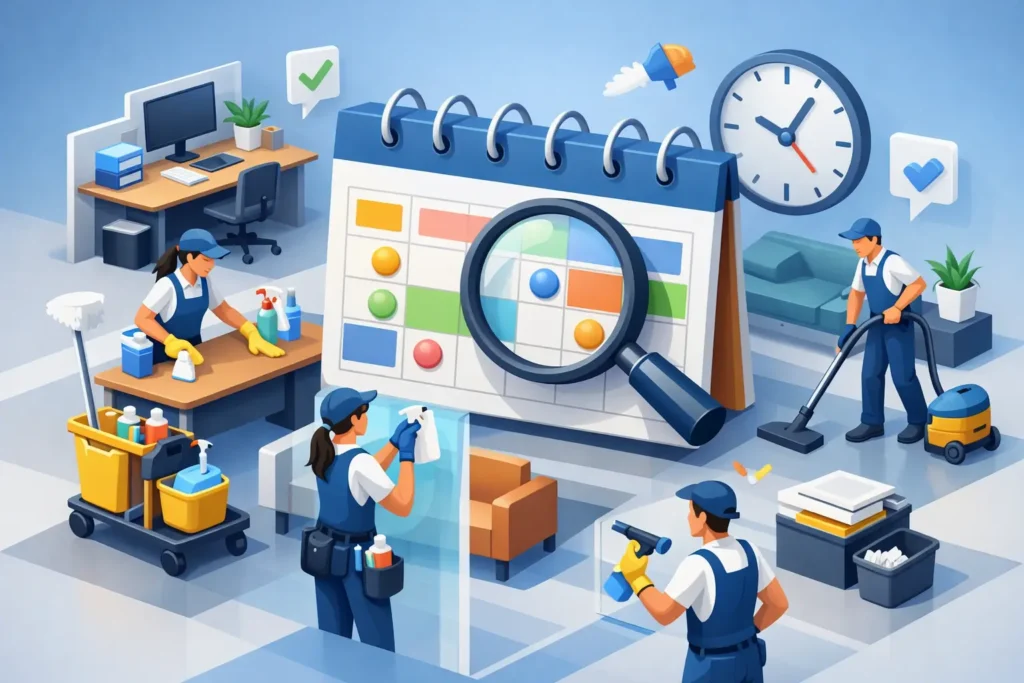
If you’ve ever reviewed a cleaning quote and thought, “That sounds fine, but what am I actually paying for?”, you’re asking the right question. What does commercial cleaning include is one of the most important things to clarify before signing any service agreement, because the answer changes depending on your site, risk level, foot traffic and operational hours.
For some businesses, commercial cleaning means a straightforward after-hours office clean. For others, it includes washroom sanitation, lunchroom hygiene, touchpoint disinfection, factory amenities, rubbish handling, floor care and scheduled deep cleaning. The key is not whether a task sounds standard. The key is whether it is clearly included, consistently delivered and matched to how your site actually runs.
What does commercial cleaning include in practice?
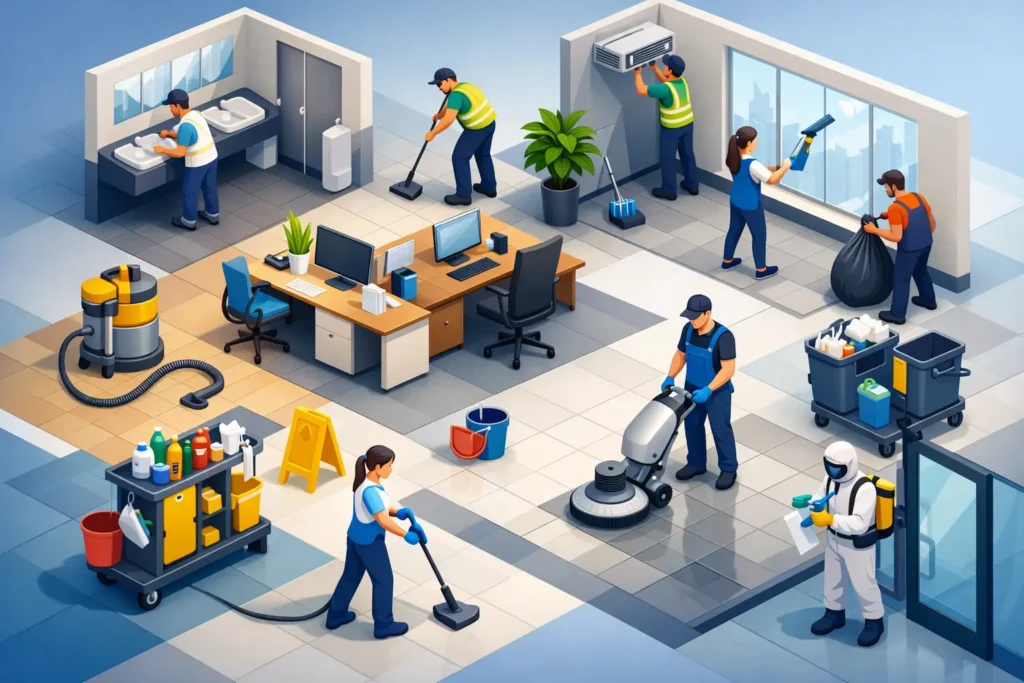
At a practical level, commercial cleaning usually covers the routine cleaning needed to keep a business presentable, hygienic and safe. That generally includes vacuuming carpets, mopping hard floors, wiping desks and surfaces, emptying bins, cleaning kitchens or staff rooms, sanitising washrooms and removing visible dust from accessible areas.
That sounds simple, but there is a difference between a basic tidy-up and a structured commercial cleaning service. A professional service is built around frequency, scope and accountability. Instead of vague expectations like “clean the office properly”, the work should be tied to a site-specific schedule so the cleaner, the client and the provider all know what gets done, when it gets done and how standards are checked.
This matters most in workplaces that can’t afford inconsistency. Offices need a clean and professional presentation. Warehouses and factories need attention to staff amenities, entry points and shared areas. Medical clinics need higher sanitation standards. Retail and hospitality venues need cleaning that supports customer experience without disrupting trade.
The core tasks most commercial cleaning contracts cover
Most commercial cleaning contracts start with the same foundation. Floors are cleaned according to the surface type, whether that means vacuuming carpet, sweeping warehouse walkways or mopping tiled entries. Bins are emptied and relined. Smudges, dust and fingerprints are removed from benches, counters, desks, glass partitions and other touchable surfaces.
Washrooms are a standard inclusion in almost every site. That means toilets, basins, mirrors, dispensers, partitions and floors are cleaned and sanitised, with consumables often checked or restocked depending on the agreement. In many businesses, washroom condition is one of the first signs of whether the cleaning service is actually being managed well.
Staff kitchens and breakout areas are also commonly included. Sinks, taps, benches, cupboard fronts, splashbacks, tables and appliance exteriors are usually wiped down, with rubbish removed and floors cleaned. If lunchrooms are heavily used, they may need more frequent attention than the rest of the site.
Entry areas, reception spaces and meeting rooms are another routine focus. These areas shape first impressions, so they often need a higher presentation standard than back-of-house zones. Spot cleaning glass, removing marks from doors and keeping floors clean around entrances can make a noticeable difference, especially in client-facing businesses.
What is often included only if specified
This is where many misunderstandings happen. Not every cleaning job includes detailed work unless it is listed in the scope. Internal window cleaning, deep carpet cleaning, pressure washing, hard floor scrubbing, high dusting, wall spot cleaning and upholstery cleaning are often treated as periodic or additional services rather than part of the nightly or weekly clean.
Consumables are another area that should never be assumed. Some providers restock toilet paper, soap, hand towels and bin liners as part of the service. Others will only restock items supplied by the client. Neither model is wrong, but it needs to be clear from the start.
The same applies to sanitary disposal, sharps handling, biohazard cleaning and specialist disinfection. In medical, childcare or food-related environments, these may be essential. In a general office, they may not be relevant at all. Commercial cleaning is not one fixed package. It should reflect the site, not the other way around.
How site type changes what commercial cleaning includes
An office usually needs regular workstation cleaning, washrooms, kitchens, floors, bins and meeting rooms managed with minimal disruption. The main focus is presentation, hygiene and keeping the space comfortable for staff and visitors.
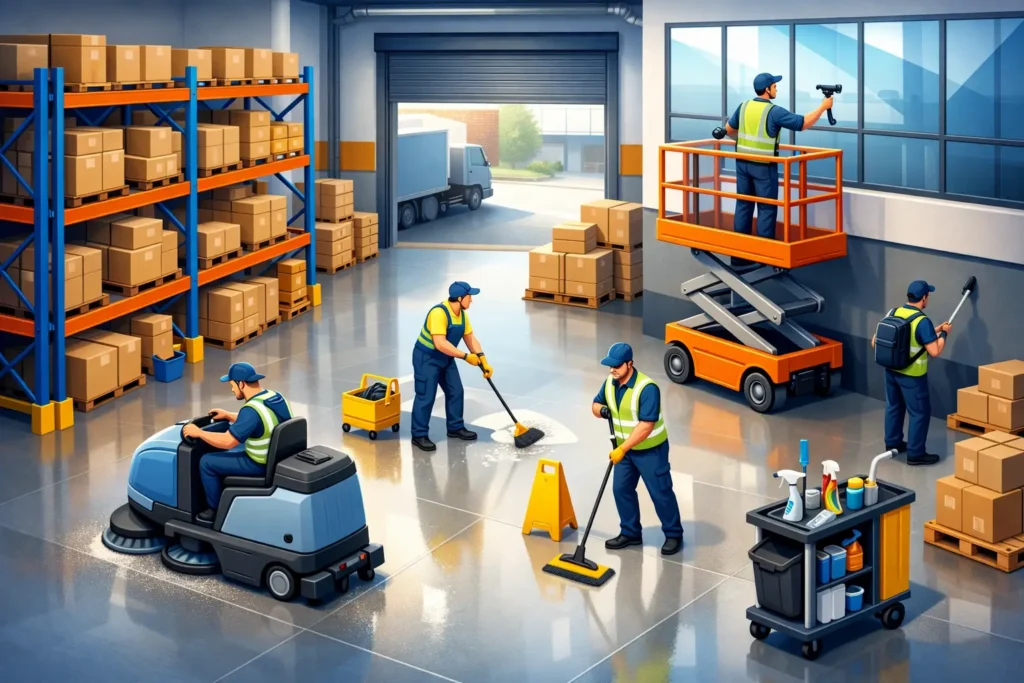
A warehouse or factory has different priorities. There may be less emphasis on desk detailing and more focus on lunchrooms, toilets, locker areas, entry points, shared touchpoints and managing dirt tracked in from operational zones. Safety matters too. A cleaner working in an industrial environment needs to understand access restrictions, hazards and what should not be moved or disturbed.
Medical centres require a more controlled approach again. Cleaning in these environments often includes treatment rooms, waiting areas, reception desks, clinical touchpoints and stricter washroom sanitation. Frequency is usually higher, and the expectation around infection control is much stronger.
Retail and hospitality sites sit in another category. They need visible cleanliness during trading hours or precise timing outside them. Front-of-house presentation, glass, floors, counters and washrooms all affect customer perception. In these settings, a missed clean is rarely invisible.
Frequency matters as much as the task list
A task can be included on paper and still fail in practice if the frequency is wrong. A small office may only need cleaning three times a week. A busy medical clinic or high-traffic retail site may need daily service, sometimes with periodic day cleaning as well.
This is why the right scope starts with usage, not assumptions. How many staff use the site? How many visitors come through? Are there public-facing washrooms? Is there food preparation? Are there shift changes? Does the space get dusty quickly because of nearby operations? These details shape the cleaning plan far more than square metre size alone.
It also affects cost. A lower quote may simply mean fewer visits, fewer checks or a narrower scope. That can look efficient at the start and create more management work later when standards slip.
What businesses should expect beyond the cleaning itself
A reliable commercial cleaning service should include more than labour. It should include structure. That means a clear schedule, defined responsibilities, quality checks and a system for fixing issues quickly when they come up.
This is where many providers fall short. The problem is not always the cleaner. It is often the lack of supervision, communication and follow-up behind the cleaner. If your team has to repeatedly report missed bins, dirty washrooms or inconsistent attendance, you are not just dealing with a cleaning issue. You are dealing with a service management issue.
For that reason, businesses should expect visibility. Site inspections, reporting, responsive communication and contingency planning all matter. If a cleaner is unavailable, there should be a replacement process. If standards drop, there should be a documented way to identify and correct it. Strong providers build this into the service instead of treating it as optional.
How to tell if a cleaning scope is right for your business
The best scope is specific enough to prevent confusion and flexible enough to adjust as your site changes. If your business grows, adds staff, extends trading hours or reconfigures the layout, the cleaning plan should change with it.
When reviewing a proposal, look for detail. Are all key rooms and areas listed? Are tasks broken down clearly? Does the frequency make sense for how the space is used? Are any exclusions called out? Is there a process for periodic deep cleaning? If the quote feels vague, the service usually will be too.
For businesses across South-East Melbourne, especially in busy office, industrial and multi-use environments, this clarity is what separates a dependable long-term cleaning partner from a provider that only looks competitive on paper. NovaOne Property Services builds cleaning plans around the way each site operates, with clear schedules, quality controls and accountability built into delivery.
What does commercial cleaning include? The short answer
It includes the routine cleaning your business needs to stay clean, safe and presentable – but the exact scope depends on the type of site, the frequency required and how clearly the service has been defined. Standard tasks usually cover floors, bins, washrooms, kitchens, surfaces and shared areas. Specialist work, deep cleaning and consumables may be included, but only if they are specified.
The better question is not just what is included. It is whether the service is designed to be delivered consistently without creating more work for your team. A cleaning scope should remove uncertainty, not add to it.
If you’re comparing providers, ask for detail, not broad promises. A good commercial cleaning plan should make your standards easier to maintain, your site easier to manage and your day easier to run.