

A medical clinic can look tidy at a glance and still fall short where it matters most. In healthcare settings, the gap between looking clean and being cleaned to the required standard affects infection control, patient confidence, staff safety and compliance. That is why medical clinic cleaning requirements need to be treated as an operational priority, not a basic after-hours task.
For practice managers and clinic owners, the challenge is rarely whether cleaning gets done. It is whether it gets done consistently, documented properly and aligned with the level of risk in each part of the site. A reception floor, a waiting room chair arm, a treatment bed and a staff kitchenette do not carry the same risk, so they should not be cleaned the same way or on the same timetable.
What medical clinic cleaning requirements actually cover
Medical clinic cleaning requirements are not just about appearance. They sit at the intersection of hygiene, infection prevention, workplace safety and patient experience. In a general practice, allied health clinic, specialist suite or medical centre, cleaning standards need to reflect how the space is used, who uses it and what contamination risks are present.
At a practical level, that means separating routine presentation cleaning from clinical cleaning tasks. Vacuuming carpets, mopping hard floors, cleaning amenities and removing rubbish are part of the baseline. But in a clinic, there is added focus on disinfecting high-touch points, preventing cross-contamination, handling waste correctly and making sure treatment and consultation areas are cleaned in a controlled way.
This is where many cleaning arrangements break down. A cleaner with general commercial experience may keep an office looking presentable, but a clinic needs more structure than a standard office schedule. The process, products, frequency and reporting all matter.
Risk-based cleaning matters more than one-size-fits-all routines
The biggest mistake in clinic cleaning is applying a flat routine across the entire site. Healthcare environments work better with a risk-based approach. Areas with regular patient contact or exposure to bodily fluids need more frequent and more targeted cleaning than low-risk back-office spaces.
Low-risk areas
Reception zones, admin offices and meeting rooms usually fall into a lower-risk category. These spaces still need consistent cleaning, especially on shared surfaces such as desks, counters, door handles, EFTPOS machines and waiting room furniture. But the focus here is often a balance between hygiene and presentation.
Medium-risk areas
Consultation rooms, corridors, amenities and shared staff areas often need a more frequent touchpoint schedule. These are spaces where multiple people move through the day, and where surface contamination can build quickly if cleaning is left to end-of-day only.
Higher-risk areas
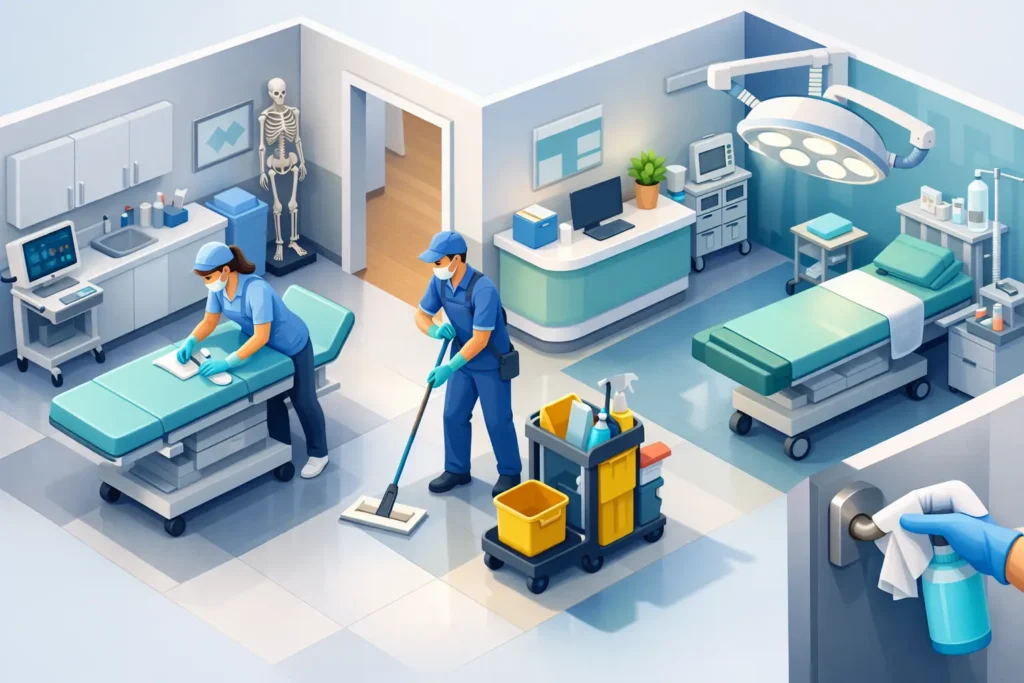
Treatment rooms, pathology collection points and procedure spaces require tighter controls. These areas may need cleaning between patients, more specific disinfectant use and stronger documentation. In some clinics, the internal clinical team handles part of this process while external cleaners manage terminal or scheduled cleaning. The division of responsibility has to be clear.
The surfaces that need the most attention
Floors matter, but high-touch surfaces usually carry more immediate infection control risk. In busy clinics, these points can be missed if cleaners are working too fast or following a generic checklist.
Door handles, light switches, counter tops, reception desks, patient chairs, armrests, tapware, toilet flush points, soap dispensers, EFTPOS terminals and shared pens all need regular attention. In treatment and consult rooms, beds, examination couches, trolley handles and equipment contact points may also require cleaning under a site-specific process.
The key issue is frequency. A once-nightly clean may be fine for some surfaces, but not for all of them. Clinics with steady patient traffic often need daytime touchpoint cleaning as well, particularly during flu season or periods of elevated infection concern.
Products, methods and cross-contamination control
Using the right product is only half the job. The method matters just as much. A disinfectant is ineffective if it is diluted incorrectly, applied to a dirty surface before pre-cleaning, or wiped off before the required contact time.
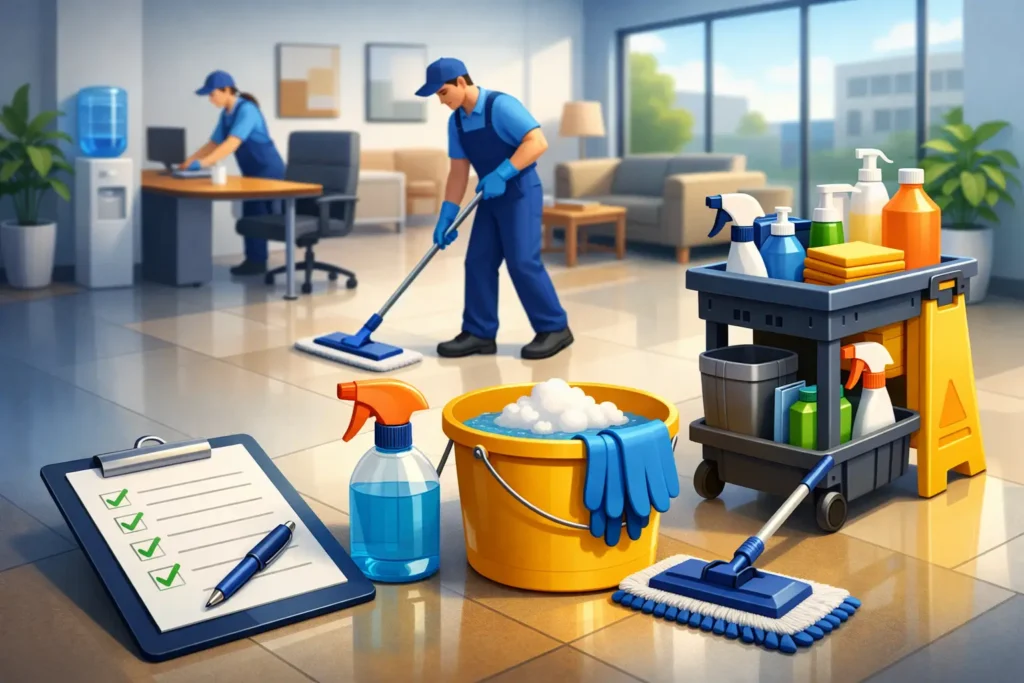
That is why clinic cleaning should be based on clear procedures rather than habit. Cloths and mop systems should be managed to reduce cross-contamination between toilets, clinical spaces, kitchenettes and general areas. Colour-coded systems are commonly used because they remove guesswork and help maintain consistency across staff and shifts.
It also pays to be realistic about products. Stronger is not always better. Some chemicals can damage surfaces, create odour issues in patient areas or introduce unnecessary safety risks for staff. The right approach depends on the clinic type, the materials in the space and the level of contamination being managed.
Scheduling is part of compliance, not just convenience
A clinic cleaning plan should fit the hours and flow of the business. Early morning, after-hours and split-shift schedules all have their place. What matters is whether the schedule actually matches site risk.
For some clinics, an after-hours service is enough. For others, especially larger medical centres or high-traffic practices, a single daily clean leaves too much gap between touchpoint disinfection and amenity maintenance. Waiting rooms, toilets and reception counters can need attention during operating hours.
This is also where reliability becomes a serious issue. In a medical setting, missed cleans or inconsistent attendance create more than a presentation problem. They can leave teams scrambling, increase management workload and expose the business to avoidable risk. A structured provider with backup staffing and quality checks is usually a better fit than an informal arrangement that depends on one person turning up.
Documentation and accountability are not optional
If a clinic manager has to chase cleaners, re-check rooms or guess whether tasks were completed, the system is already underperforming. Medical environments need visible accountability.
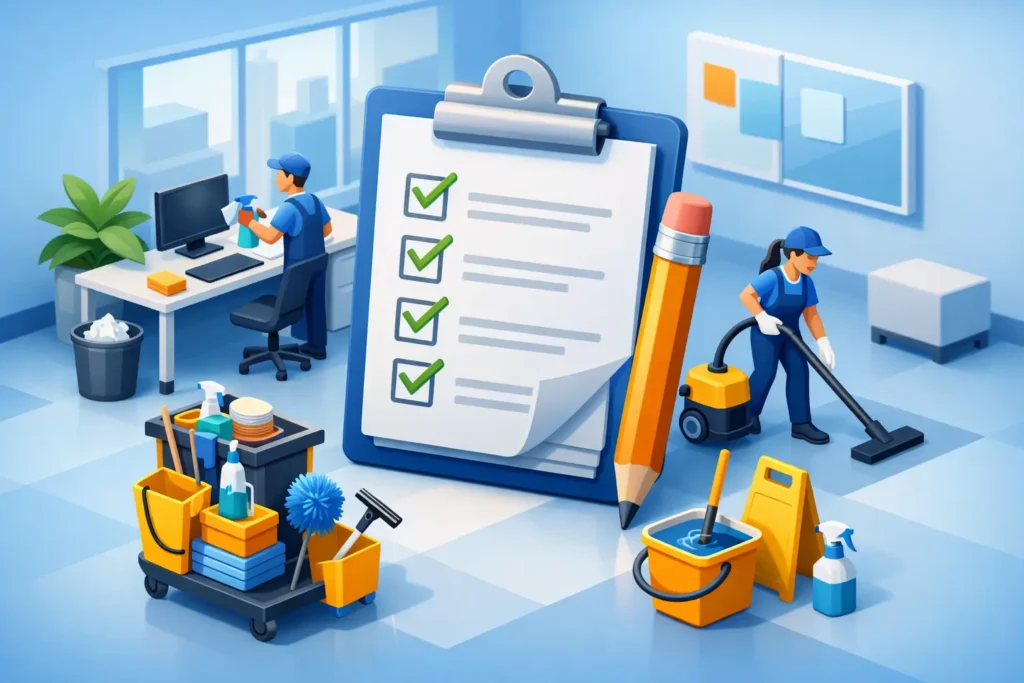
That generally means documented scopes, scheduled task lists, site-specific instructions and regular quality checks. In some clinics, photo reporting and supervisor inspections add another layer of transparency, particularly for multi-room sites or operators managing more than one location.
Documentation also helps when responsibilities overlap. If clinical staff are expected to clean certain equipment between patients while contracted cleaners handle floors, amenities and touchpoints, the boundaries should be recorded clearly. Without that, tasks can be duplicated, delayed or missed entirely.
Staff training is one of the biggest quality gaps
A checklist does not replace training. Cleaners working in medical environments need to understand why certain areas are cleaned differently, what cross-contamination looks like in practice and how to work around patients and staff without disrupting care.
That includes safe chemical handling, PPE use where required, waste management procedures and escalation steps if a spill or contamination issue is identified. It also includes softer operational skills such as discretion, consistency and communication with practice staff.
For clinic managers, this is worth checking upfront. Not every commercial cleaner is equipped for healthcare work, even if they offer it as a service category. Experience in offices or retail does not automatically translate to a medical setting.
Waste, bathrooms and waiting areas often reveal the real standard
If you want to assess whether a clinic cleaning service is up to standard, look beyond the obvious. Bathrooms, waiting areas and waste handling often show how disciplined the service really is.
Bathrooms need more than a quick wipe and mop. They require proper disinfection of contact points, restocking, odour control and close attention to corners, fittings and splash zones. Waiting areas need regular touchpoint cleaning because they concentrate the highest volume of shared contact. Waste removal needs to be prompt, controlled and aligned with whatever separation processes the clinic uses.
These are also the areas patients notice most. Clean amenities and well-maintained public spaces reinforce trust. If those standards slip, patients assume the rest of the clinic may be slipping too.
Choosing a cleaning partner for a medical clinic
The best cleaning setup for a clinic is usually not the cheapest quote or the broadest promise. It is the provider that can demonstrate structure. That means clear scopes, dependable attendance, trained staff, quality control and communication that does not leave the clinic team doing the follow-up.
For clinics across South-East Melbourne, that often comes down to operational fit. Can the provider work around patient hours, respond quickly if staffing changes, maintain documentation and deliver the same standard week after week? Those are the factors that reduce management stress and support compliance over the long term.
A performance-driven commercial cleaning partner should make the site easier to run, not harder to supervise. If your current arrangement relies on reminders, rework or constant checking, the issue is not just cleaning quality. It is the lack of a proper system.
The clinics that stay cleaner, safer and easier to manage are usually not the ones doing anything flashy. They are the ones treating cleaning as part of daily operations, with the same attention they give scheduling, patient flow and staff procedures.