

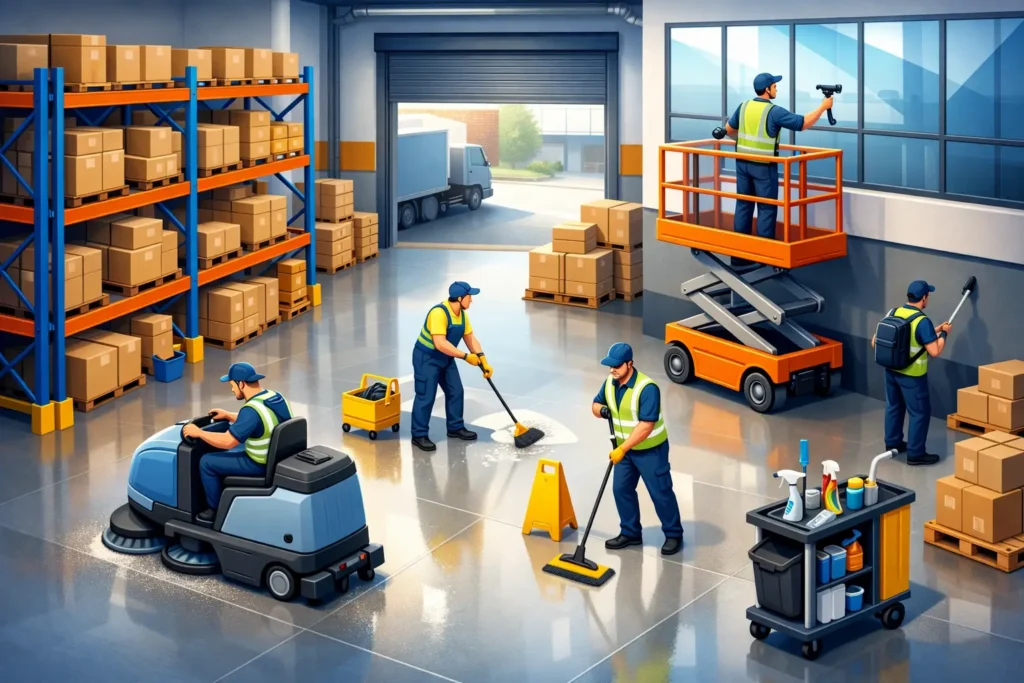
A warehouse floor tells you a lot about how a site is being run. Dust building up along racking, stretch wrap caught in corners, oil near loading areas, and dirty amenities usually point to the same problem – cleaning is being handled reactively instead of systematically. When businesses look at warehouse cleaning in Hallam, essential maintenance tips matter because the goal is not just presentation. It is safer operations, less downtime, fewer compliance issues, and a site that works properly every day.
In Hallam, many warehouses deal with high traffic, pallets moving constantly, staff on foot, and stock coming in and out at pace. That creates a cleaning environment that is very different from an office or retail site. A quick once-over at the end of the day rarely fixes the real issues. What works is a cleaning plan that matches the way the warehouse actually operates.
Contact NovaOne Property Services today for a customised commercial cleaning solution tailored to your business needs.
Request Your Free Quote Today
📞 Phone: 1300 788 845📧 Email: support@novaoneproperty.com.au 🌐 Website: www.novaoneproperty.com.au
✅ Fast response times ✅ Flexible commercial cleaning solutions
Why warehouse cleaning in Hallam needs a different approach
Industrial and logistics spaces collect dirt differently. Fine dust settles on shelving, beams, stock and equipment. Forklift traffic drags in grime from loading zones. Packaging waste builds up quickly. Shared staff areas can become unhygienic fast if they are not cleaned on a clear schedule.
That means warehouse cleaning in Hallam is not just about keeping the place tidy. It supports safety, workflow and asset protection. Slippery floors increase incident risk. Dust around stock and machinery can affect quality and maintenance. Poorly maintained amenities and lunchrooms also affect staff experience, especially on larger sites with multiple shifts.
The practical challenge is that not every area needs the same attention at the same time. High-traffic aisles, receiving bays and amenities need frequent cleaning. High-level dusting, wall cleaning and deep scrubbing may be less frequent, but they still need to be planned. When everything is treated as a one-size-fits-all job, standards usually slip.
Start with traffic patterns, not a generic checklist
A common mistake in warehouses is using a standard cleaning checklist that ignores how the site actually functions. A warehouse with heavy dispatch activity has different pressure points from one focused on storage. Before setting any routine, identify where dirt is generated, where it travels, and where it creates the most risk.
For most Hallam warehouses, that means separating the site into operational zones. Loading docks, forklift routes, picking aisles, packing stations, offices, lunchrooms, toilets and external entries all have different cleaning demands. Once those zones are mapped properly, it becomes easier to set cleaning frequencies that are realistic.
This approach helps avoid wasted time. There is no value over-servicing low-use areas while busy zones are left too long between cleans. The most effective maintenance plans are built around site activity, not assumptions.
Floors need more than a sweep
Warehouse floors carry the biggest cleaning load and usually the biggest safety risk. Dust, pallet debris, shrink wrap, liquid spills and tyre marks all affect both appearance and function. A basic sweep can help, but it will not remove built-up grime or fine particles properly.
For larger sites, machine scrubbing is often the better option because it lifts residue rather than just moving it around. The right method depends on the floor type, the amount of traffic, and whether the site handles food products, manufacturing materials or standard dry goods. In some environments, daily attention is necessary. In others, a mix of spot cleaning and scheduled machine cleaning works better.
The key is consistency. If floors are only cleaned thoroughly when they look bad, the site is already behind.
Dust control is not cosmetic
In warehousing, dust is often underestimated because it builds gradually. By the time it is obvious on beams, vents, racks and stock, it has usually been sitting there for weeks or months. Apart from presentation, that can create issues for stock quality, air cleanliness, equipment performance and general housekeeping standards.
Dust control needs to be treated as part of routine maintenance, not a once-a-year catch-up job. Lower-level surfaces should be cleaned frequently, while high dusting should be scheduled around access requirements and warehouse operations. If elevated work platforms or specialised equipment are needed, timing matters. The clean has to be done without disrupting productivity or creating unnecessary safety risks.
Focus on amenities and staff areas without letting standards drift
Warehouses often prioritise operational zones and leave lunchrooms, toilets and locker areas as secondary concerns. That is a mistake. These spaces have a direct impact on hygiene, staff wellbeing and how your business is perceived internally.
Amenities also show very quickly when cleaning is inconsistent. Soap dispensers run empty, bins overflow, floors become sticky, and high-touch surfaces are missed. On multi-shift sites, this can happen within hours. A maintenance plan should reflect actual usage, not a fixed assumption that one clean per day is enough.
In many cases, the best outcome comes from combining scheduled cleaning with periodic checks during busier periods. It reduces complaints, keeps consumables stocked, and prevents small hygiene issues becoming a recurring management problem.
Build cleaning around operations, not against them
The right cleaning plan should support warehouse performance, not interrupt it. That means timing matters as much as task selection. Some sites are best serviced after dispatch closes. Others need early morning cleans before staff arrive. Some require split servicing, with amenities handled during the day and operational cleaning completed after hours.
There is always a trade-off. Cleaning during operating hours can improve responsiveness for spills and amenities, but it also increases interaction with staff, forklifts and workflow. After-hours cleaning reduces disruption, but it may leave issues sitting too long if there is no process for daytime touch-ups. The best arrangement depends on how the site runs.
This is where structured service delivery becomes valuable. A cleaning schedule should be visible, repeatable and monitored. If tasks depend on someone remembering them or chasing them up, the system is already too weak.
Pay attention to waste handling and clutter control
A warehouse does not need to be dirty to become unsafe. Often, the issue is clutter. Damaged pallets, discarded wrap, cardboard build-up and unmanaged rubbish around packing or dispatch zones can quickly affect access and workflow.
Good maintenance includes clear waste handling routines. Bins need to be placed where waste is generated, emptied before overflow becomes normal, and matched to the type of materials being discarded. Recycling areas also need to be kept clean and organised, otherwise they become another source of mess.
This is one of the most preventable issues on a warehouse site. When waste removal is built into the cleaning plan, the site stays easier to manage. When it is left to whoever notices it, standards usually become inconsistent.
Don’t ignore external entry points
Much of the dirt inside a warehouse starts outside. Loading aprons, roller door entries, walkways and car park connections all track dust and grime into the building. If these access points are neglected, internal cleaning becomes less effective because the contamination cycle never stops.
That does not mean every external area needs constant attention. It means the busiest entry points should be reviewed as part of the maintenance plan. Sweeping, pressure cleaning where appropriate, and keeping door tracks clear can all reduce how much debris is carried inside.
For Hallam sites that deal with mixed weather and regular vehicle movement, this can make a noticeable difference to internal floor condition.
Use inspections to catch drift early
Even a well-designed cleaning scope can lose effectiveness if nobody checks it properly. Warehouses are busy environments, and standards can slide quietly. A missed corner becomes normal, a dusty rack level is ignored, or an amenities issue keeps returning because no one follows it through.
Regular inspections fix that. They do not need to be complicated, but they do need to be consistent. The purpose is to verify outcomes, not just confirm attendance. That means checking actual floor condition, dust levels, bin management, amenities presentation and whether the cleaning frequency still matches the site’s activity.
For businesses managing larger or multi-site operations, documented checks are especially useful. They reduce guesswork, improve accountability and make service adjustments easier when site demands change. This is one reason experienced providers use reporting and scheduled reviews rather than relying on verbal updates alone.
Choose a cleaning partner that can handle warehouse realities
Warehouse cleaning is not a fill-in service. It needs people who understand industrial environments, work safely around operational risks, and follow a structured system. Reliability matters just as much as cleaning quality, because missed cleans or inconsistent attendance can disrupt more than appearance.
A good provider should be able to explain how they will manage your schedule, your traffic flow, your risk points and your quality checks. If the proposal is vague, the service often will be too. For Hallam businesses dealing with frequent stock movement and time-sensitive operations, that gap shows up quickly.
NovaOne Property Services works with commercial and industrial sites across South-East Melbourne using scheduled plans, site inspections and consistent reporting, which is exactly the sort of structure warehouse environments need.
The best warehouse cleaning results usually come from small disciplines done consistently – the right floor care, the right amenity frequency, better dust control, and regular checks before issues become expensive. A clean warehouse is easier to run, easier to manage and easier to trust day after day.