

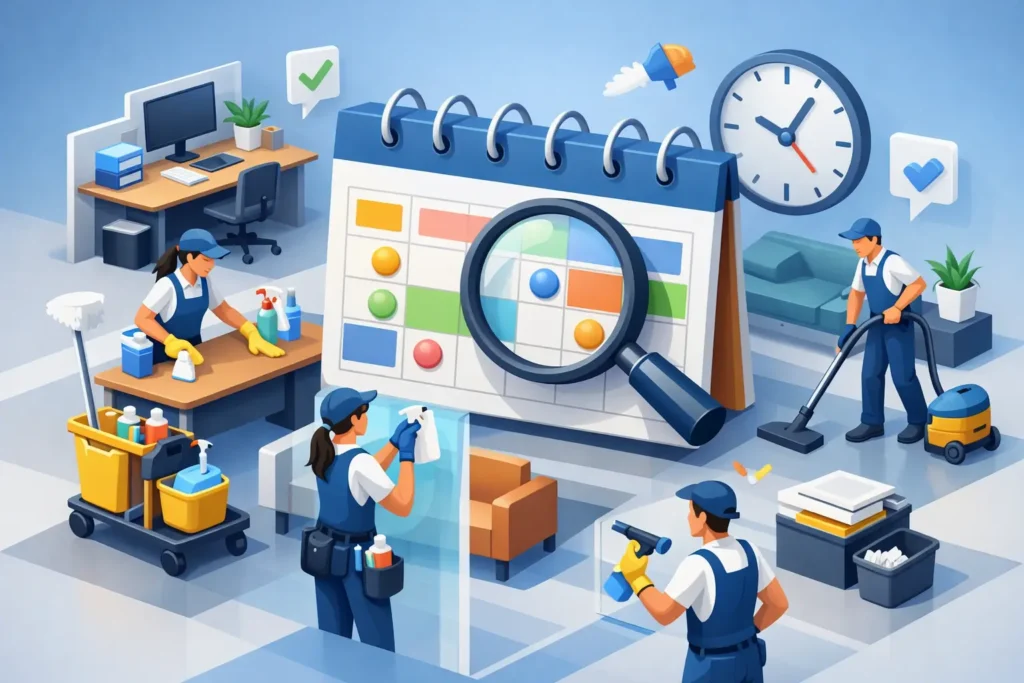
A spotless site after a one-time clean can look like the problem is solved. Then a week later, bins are full, amenities are below standard, dust is building again, and staff are back noticing what was missed. That is the real issue in one off cleaning vs regular cleaning – not which service sounds cheaper upfront, but which one actually supports your business day after day.
For commercial operators, cleaning is rarely just about appearance. It affects presentation, staff morale, hygiene, client confidence and, in some environments, compliance. The right choice depends on how your site operates, how often it gets used and how much risk comes with standards slipping between cleans.
One off cleaning vs regular cleaning: what is the difference?
A one off clean is a single service delivered for a specific reason. That might be after building works, before a handover, at the end of a lease, ahead of an inspection, or when a site has fallen behind and needs a reset. It is usually more detailed and labour-intensive because the cleaner is dealing with built-up grime, neglected areas or tasks outside normal routine cleaning.
Regular cleaning is scheduled service. It could be daily, several times a week, weekly or tailored around your operating hours. The aim is not to rescue a site once it has reached a poor standard. It is to keep the workplace consistently clean, safe and presentable with less disruption and fewer surprises.
That difference matters. One off cleaning is reactive. Regular cleaning is preventative.
When a one off clean makes sense
There are plenty of situations where a one off clean is the right call. If you have just finished a fit-out, hosted a major event, changed tenants or inherited a site that has been neglected, a single deep clean can bring the premises back to standard quickly.
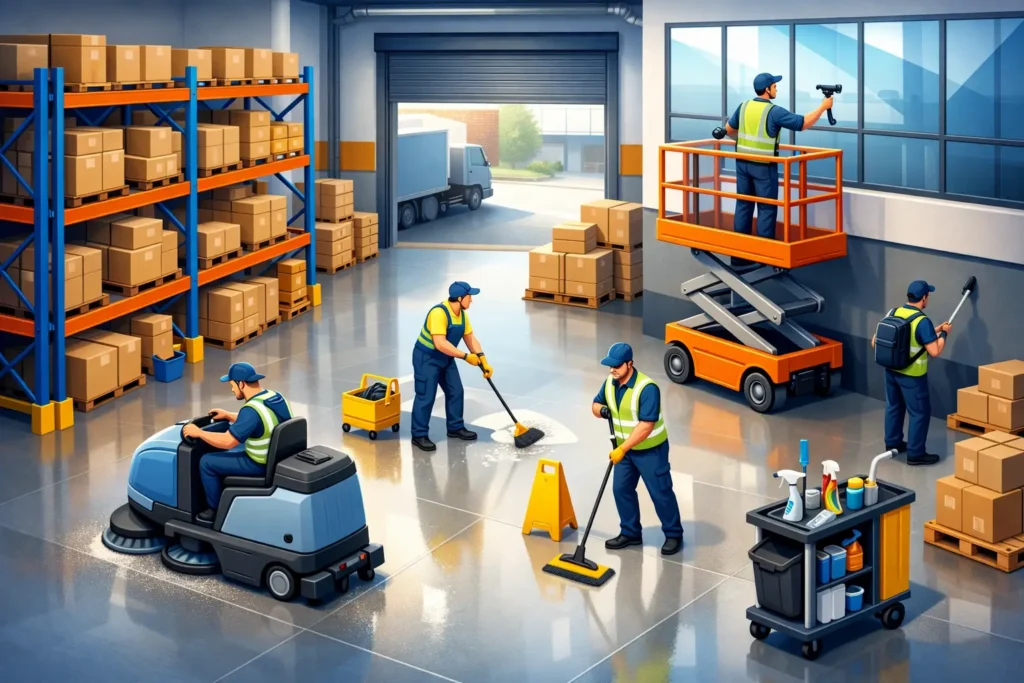
This is also common in warehouses, factories and larger commercial sites where certain areas do not need daily attention but periodically require a heavier clean. High dust zones, hard floor scrubbing, detailed kitchen restoration or washroom recovery work often fall into this category.
The benefit is obvious. You address a specific problem without committing to an ongoing schedule.
The limitation is just as clear. A one off clean does not create consistency. Once the job is done, cleanliness starts declining again from that point onward. If your workplace has daily foot traffic, shared amenities, customer-facing areas or strict hygiene expectations, the result will not hold for long.
Where regular cleaning delivers more value
For most active commercial sites, regular cleaning is the stronger long-term option. Offices need kitchens, desks, meeting rooms and bathrooms kept at a professional standard. Medical and childcare environments require much tighter hygiene control. Retail and hospitality venues rely on presentation every day, not only after a deep clean. Warehouses and industrial sites need routine attention to offices, lunchrooms, amenities and touchpoints even if the operational floor itself has different cleaning needs.
The value of regular cleaning is not only in the cleaning itself. It is in reducing management effort. When the service is structured properly, your team does not need to chase cleaners, repeat instructions or inspect obvious missed tasks every morning.
That is why businesses often move away from casual, ad hoc arrangements. The hidden cost of inconsistency is usually higher than the saving on paper. Poor cleaning creates complaints, distracts staff, affects visitors and can force urgent call-outs that cost more than planned maintenance ever would.
Cost is not just the invoice
A lot of businesses compare one off cleaning vs regular cleaning based on the upfront price. That is understandable, but it is not the full commercial picture.
One off cleaning often has a higher rate per visit because more labour, time and equipment are needed to deal with accumulated dirt and neglected areas. Regular cleaning usually spreads cost across a schedule, with each visit focused on maintaining standards before the site deteriorates.
If you only book one off cleans for a busy site, the pattern can become expensive. Standards drop, complaints build, and eventually you need another intensive clean to recover the space. That cycle is inefficient.
By contrast, regular cleaning tends to stabilise both standards and spend. It becomes easier to forecast costs, easier to manage site expectations and easier to identify when extra services are genuinely needed rather than urgently required due to neglect.
Standards, accountability and reliability
This is where many commercial clients have been let down before. A one off clean can be easy to arrange, but that does not mean it will be managed well. Regular cleaning, on the other hand, exposes whether a provider has real systems behind the service.
For a business, cleaning should not depend on whether one person remembers a checklist or turns up in the right mood. It should be supported by scheduling, supervision, quality control and clear communication. Without that structure, regular cleaning becomes inconsistent very quickly.
That is also why ongoing cleaning contracts suit businesses that want fewer operational headaches. A provider with proper systems can monitor performance, replace unavailable staff, keep service standards on track and respond before small issues become bigger ones. The cleaning itself matters, but the reliability behind it matters just as much.
Which option suits your site?
It depends on how your premises are used.
If your site is low traffic, only occasionally occupied or needs attention for a specific event or transition, a one off clean may be enough. This can work for vacant spaces, post-construction handovers or occasional specialist work.
If people are using the site every day, regular cleaning is usually the practical choice. Shared kitchens, staff toilets, reception zones, treatment rooms, customer areas and high-touch surfaces all decline fast when there is no routine service in place.
Some businesses need both. A regular cleaning plan handles day-to-day presentation and hygiene, while one off deep cleaning is used periodically for carpets, hard floors, high dusting or detailed restoration work. That combination often gives the best result because it protects daily standards without ignoring the heavier tasks that build up over time.
Signs you have outgrown one off cleaning
Some businesses start with ad hoc cleans because it feels flexible. Over time, the warning signs become obvious. Staff start raising hygiene issues. Bathrooms do not stay presentable between visits. Rubbish management slips. Dust returns quickly. Management spends too much time following up. Visitors notice inconsistencies.
That usually means the site no longer needs a reset. It needs a system.
Regular cleaning is not about paying for more than you need. It is about matching service frequency to actual site use. In many cases, that can be tailored very precisely. Some sites need daily attendance, some need three visits a week, and some only need weekly service with periodic deep cleans added in. The right schedule is based on usage, not guesswork.
How to choose without overcommitting
If you are deciding between one off cleaning and a recurring service, start with a practical assessment. Look at foot traffic, opening hours, the number of staff on site, customer visibility, compliance requirements and how quickly standards drop after a clean.
Then ask the more useful question: what happens if the site is not cleaned for seven days, or fourteen? In some businesses, not much changes. In others, standards fall apart in half that time.
It also helps to look at internal cost. If your team is constantly noticing issues, making complaints, tidying up after cleaners or arranging emergency visits, you are already paying for inconsistency. It just is not showing up as a line item in the same way.
A professional provider should be able to recommend a realistic schedule based on site conditions, not push a generic package. For businesses across South-East Melbourne, that often means starting with a site inspection, identifying pressure points and building a cleaning plan around how the premises actually function. That is where experienced commercial operators like NovaOne Property Services tend to stand apart from general cleaners – the service is designed to hold a standard, not just complete a visit.
The better choice is the one that reduces risk, protects presentation and saves management time. If a one off clean solves the issue, keep it simple. If the same issues keep returning, regular cleaning is usually the more efficient decision.
A clean workplace should not depend on when things get bad enough to act. The strongest setup is one that keeps your site ready before anyone notices a problem.