

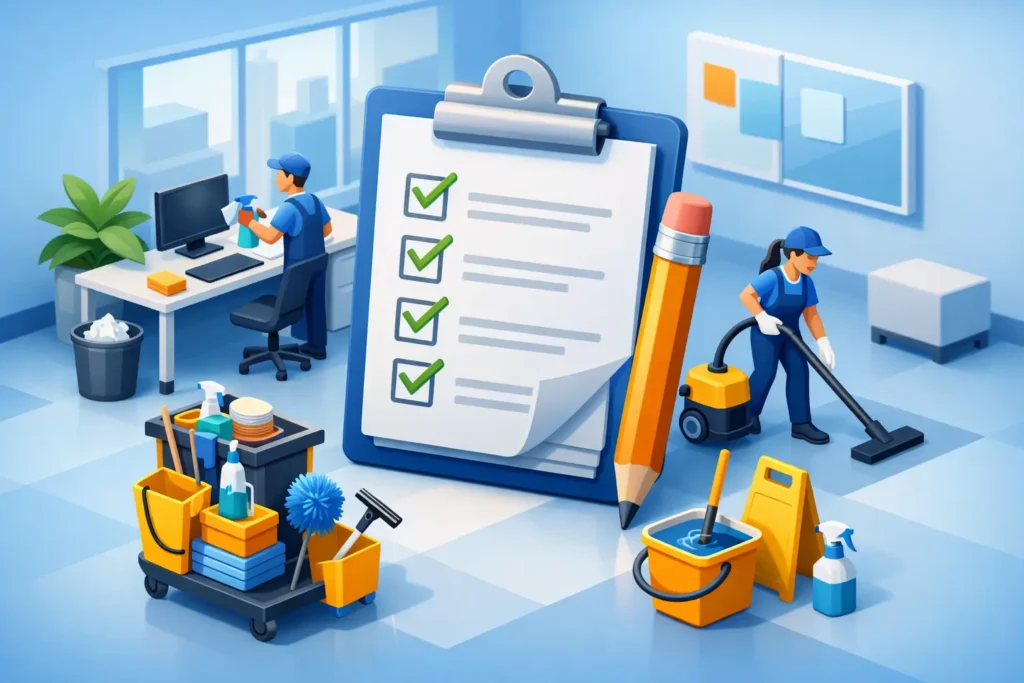
If you are still judging cleaning by whether the bins were emptied and the carpets look passable, you are probably managing more risk than you realise. The Bayswater North office cleaning checklist every business manager needs is not about making a workplace look tidy for an hour. It is about protecting presentation standards, reducing complaints, supporting staff wellbeing and making sure your cleaner is actually delivering what you are paying for.
In a busy office, cleaning problems rarely start with one obvious issue. They build quietly. Smudged glass becomes part of the background. Dust gathers on skirting and vents. Kitchens lose basic hygiene. Toilets start looking tired by midweek. Then staff notice, visitors notice and management ends up chasing a contractor instead of focusing on operations. A proper checklist stops that drift.
Contact NovaOne Property Services today for a customised commercial cleaning solution tailored to your business needs.
Request Your Free Quote Today
📞 Phone: 1300 788 845📧 Email: support@novaoneproperty.com.au 🌐 Website: www.novaoneproperty.com.au
✅ Fast response times ✅ Flexible commercial cleaning solutions
Why an office cleaning checklist matters more than most managers think
A checklist gives structure to something that is often left too vague. When expectations are not documented, service quality becomes subjective. One person thinks the office is fine. Another notices fingerprints on entry glass, grime around taps and overflowing sanitary bins. Without a checklist, there is no clear benchmark and no easy way to hold anyone accountable.
That matters even more in suburbs like Bayswater North, where offices often sit alongside warehouses, light industrial sites and high-traffic commercial spaces. Dirt travels in faster, shared amenities work harder and presentation standards need to hold up under daily use. The right checklist should reflect that reality instead of relying on a generic office clean that ignores how the site actually operates.
A strong checklist also helps with budgeting. It shows what must be cleaned daily, what can be done weekly and what needs periodic attention. That reduces overservicing in low-priority areas and under-servicing in the places that affect hygiene, safety and client perception most.
The Bayswater North office cleaning checklist every business manager needs
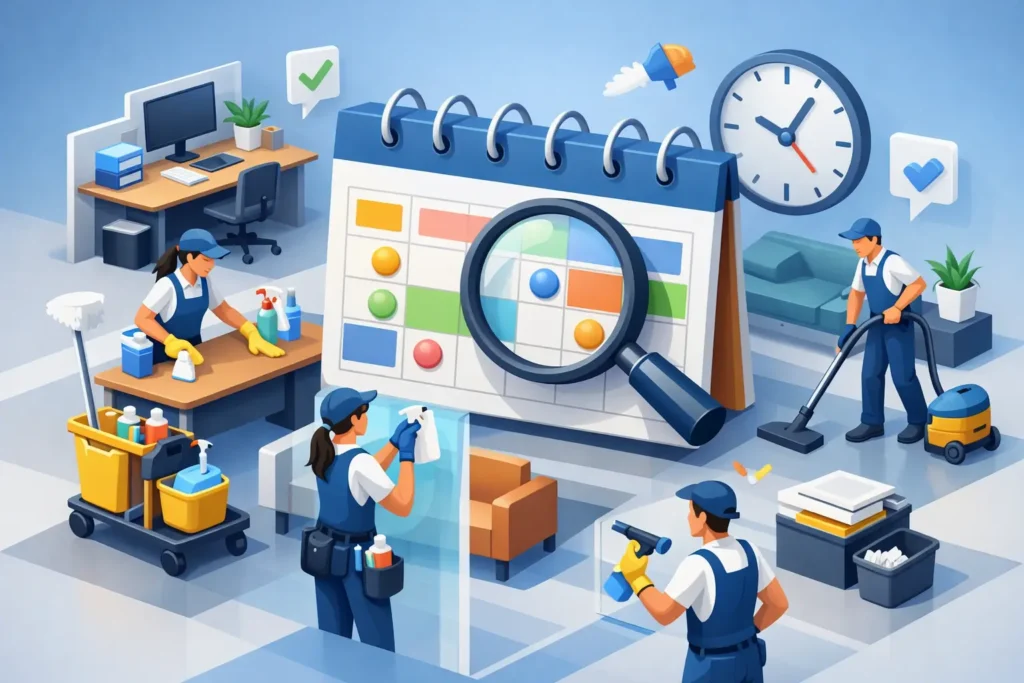
The most effective checklist is built around frequency, not just tasks. Daily items keep the site functional and presentable. Weekly tasks deal with buildup. Periodic work protects the overall standard and extends the life of surfaces, carpets and amenities.
Daily checklist items
Reception and entry areas should be the first checkpoint. Glass doors need spot cleaning, hard floors should be vacuumed or mopped as required, entrance mats should be tidied and rubbish removed. If your front-of-house area is the first thing clients see, it cannot be treated as an afterthought.
Workstations and shared office zones need a practical approach. Empty bins, vacuum carpeted traffic areas, wipe desks if that is included in the agreed scope, clean touchpoints such as door handles and light switches, and remove visible dust from accessible surfaces. The key here is clarity. Some offices want every desk wiped. Others prefer cleaners not to disturb workstations. If that is not documented, problems follow.
Kitchen and breakout areas deserve tighter controls than many sites give them. Benchtops should be sanitised, sinks cleaned, appliance fronts wiped, rubbish removed, floors mopped and obvious spills addressed immediately. If staff are eating on site every day, the kitchen is not a secondary area. It is one of the highest-risk zones for hygiene complaints.
Bathrooms should be checked against a stricter standard. Toilets, urinals, basins, taps, mirrors and partitions need cleaning and sanitising. Consumables such as toilet paper, soap and paper towel should be restocked. Floors need mopping with attention to corners and around fixtures, where grime builds fast. If toilets are only cleaned for appearance, not hygiene, staff will notice quickly.
Weekly checklist items
Weekly cleaning should deal with the detail work that daily services often miss. This includes skirting boards, low-level dusting, internal glass, detailed vacuuming along edges, wiping of chair legs and spot cleaning marks on walls or doors. These are the tasks that stop an office from gradually looking neglected.
Kitchen areas should also get a deeper weekly reset. Microwave interiors, fridge exteriors, cupboard fronts and splashbacks should all be cleaned properly. If your team uses a shared fridge heavily, internal cleaning may need to be assigned either to staff or included in the contract. What matters is that someone owns it.
Bathrooms need extra weekly attention on grout lines, partitions, tile edges and fixtures where mineral buildup appears. A toilet can be sanitised daily and still look poorly maintained if scale and staining are left to develop.
Periodic checklist items
Some cleaning tasks should not sit on a daily or weekly schedule, but they still need to be planned. Carpet steam cleaning, hard floor scrubbing, high dusting, air vent cleaning, upholstery cleaning and detailed window cleaning all fall into this category. If these items are left out of the checklist entirely, they rarely happen until the office looks worn.
This is where many business managers get caught. They assume their regular cleaning service covers everything, when in practice it often covers only routine visible tasks. Periodic maintenance should be scheduled in advance, not requested only when standards slip.
Areas managers should inspect personally
Even with a reliable contractor, there are a few areas worth checking yourself or assigning to a supervisor. Entry glass, bathrooms, kitchens and floor edges tell you a lot about the quality of a clean. If those areas are being maintained properly, the rest of the site usually is as well.
It also helps to inspect at the right time. A bathroom can look acceptable at 7 pm straight after a clean and poor by 11 am if usage is high. That does not always mean the cleaning was substandard. It may mean the frequency is wrong for the site. Good service management separates poor performance from poor scheduling.
What a checklist should include beyond cleaning tasks
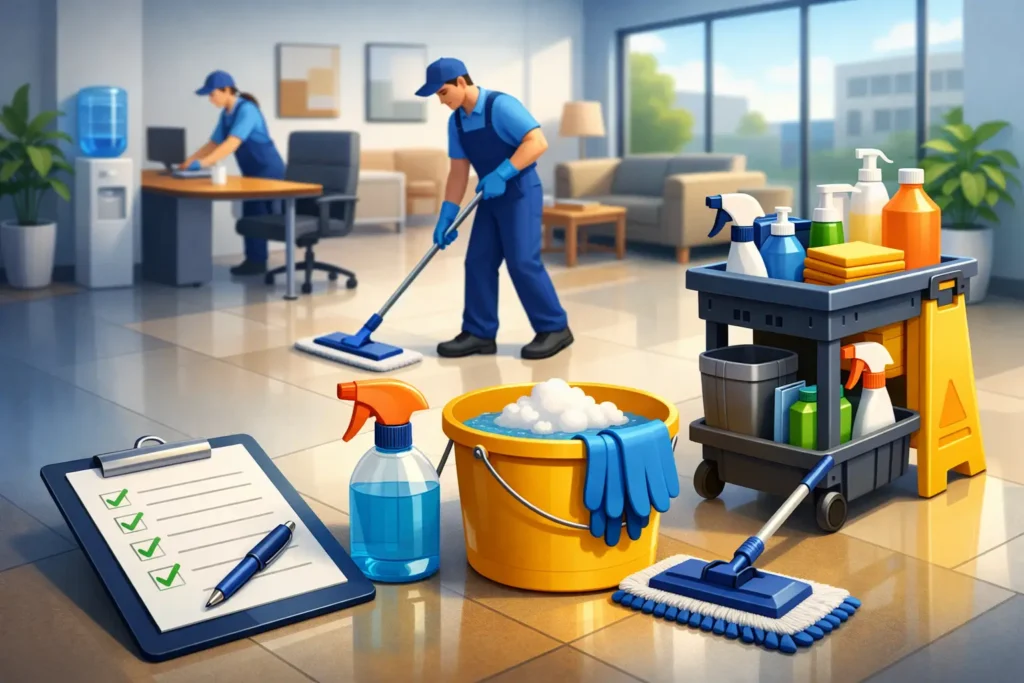
A useful office cleaning checklist is not just a task sheet. It should also define scope, frequency, exclusions and reporting. If you want consumables checked daily, note it. If you want photo reporting for key areas, include it. If some rooms require after-hours access or security procedures, record that as part of the service expectations.
This matters because many cleaning disputes are not really about cleaning. They are about communication gaps. The cleaner thinks the task is outside scope. The manager assumes it is included. A checklist closes that gap before it becomes a recurring issue.
For larger offices or multi-zone workplaces, it also helps to separate responsibilities by area. Front office, meeting rooms, amenities, staff kitchen and back-of-house spaces should each have clearly defined standards. That makes inspections simpler and performance easier to track.
Common checklist mistakes that lead to inconsistent results
The first mistake is copying a generic template from another site. A ten-person professional office and a high-traffic office connected to industrial operations do not need the same cleaning schedule. Site conditions, flooring types, staff numbers and visitor traffic all affect what should be cleaned and how often.
The second mistake is making the checklist too broad. Terms like clean kitchen or sanitise bathrooms sound fine until different people interpret them differently. Clear task descriptions remove ambiguity and make it easier to verify performance.
The third is ignoring review points. A checklist should not stay unchanged for two years while the office layout, staffing levels or operating hours shift around it. Cleaning plans need adjustment as businesses grow.
Using the checklist to choose the right cleaning partner
The Bayswater North office cleaning checklist every business manager needs is also a screening tool. When you ask a cleaning provider to review your checklist, their response tells you a lot. A professional contractor will talk about frequency, access, staffing, supervision, quality control and how they will report on outcomes. A weaker operator will usually just talk about price.
That difference matters over the length of a contract. Reliable cleaning is not only about whether someone turns up. It is about whether the service is structured well enough to stay consistent month after month, even when staff change or site pressures increase.
For businesses that are tired of chasing cleaners, a performance-based arrangement is usually the better fit. That means documented scopes, regular inspections, quick issue resolution and backup systems when a cleaner is unavailable. NovaOne Property Services positions its commercial cleaning around exactly those operational controls because they reduce management effort and improve service reliability.
A checklist should save time, not create admin
Some managers avoid formal checklists because they think it will add paperwork. In practice, the opposite is true. A clear checklist reduces follow-up, cuts back on avoidable complaints and gives both sides a shared standard to work from. You spend less time re-explaining expectations and more time managing the business.
The best version is simple, specific and reviewed regularly. It should reflect how your office actually runs, where the hygiene risks sit and which presentation details matter most to staff and visitors.
If your current cleaning service feels inconsistent, the problem may not be effort alone. It may be that no one has set the standard properly. A practical checklist gives you that standard – and once it is in place, better cleaning becomes much easier to measure.