

A carpet that looks fine at 9 am can be the reason your reception smells stale by 2 pm. In commercial settings, cleaning methods are not a cosmetic decision. When weighing up steam cleaning vs dry cleaning, the right choice affects appearance, hygiene, downtime, and how long your flooring and upholstery actually last.
For offices, medical centres, retail spaces, hospitality venues, and industrial facilities, the question is rarely which method sounds better. It is which method suits the site, the traffic levels, the material, and the operating schedule. That is where many businesses lose time and money – by using the wrong method for the wrong environment.
Steam cleaning vs dry cleaning: what is the difference?
Steam cleaning and dry cleaning both aim to remove soil, marks, and embedded debris, but they work very differently.
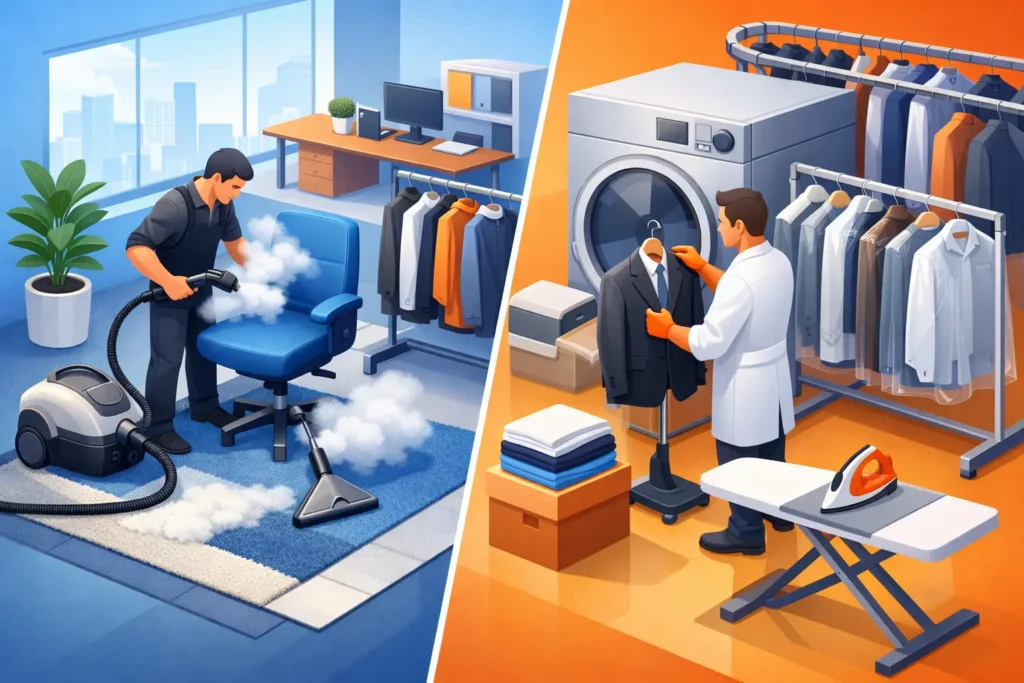
Steam cleaning, often called hot water extraction, uses heated water and cleaning solution pushed deep into carpet or upholstery fibres, then extracted with powerful suction. Despite the name, it is not usually just steam. The key result is a deeper flush through the material, which helps remove dirt, allergens, bacteria, and residue sitting below the surface.
Dry cleaning uses far less moisture. Depending on the system, it may involve an absorbent compound, low-moisture bonnet cleaning, or encapsulation products that lift and trap soil for later removal. It is designed for faster turnaround and minimal drying time.
The practical difference is simple. Steam cleaning goes deeper and is usually better for restorative results. Dry cleaning is faster and can be better where access needs to resume quickly.
When steam cleaning makes more sense
If your site has built-up grime, recurring odours, spill history, or high foot traffic, steam cleaning is often the stronger option. It is especially effective in commercial carpets that have absorbed fine dust, food particles, moisture, and oils over time.
This matters in workplaces where presentation and hygiene both count. A medical clinic waiting room, a busy office corridor, or a function space with regular traffic needs more than a surface refresh. Steam cleaning can help remove contamination below the visible layer, not just improve the look of the pile.
It is also a solid choice for periodic deep cleaning. Many businesses use routine maintenance through the year, then schedule steam cleaning at set intervals to reset the condition of carpets and upholstered furniture.
That said, steam cleaning comes with trade-offs. Drying time is longer. Access may need to be restricted for several hours, and in poorly ventilated areas it can take longer again. If the job is not done properly, over-wetting can create its own issues. That is why equipment quality, technician experience, and correct extraction matter.
When dry cleaning is the better fit
Dry cleaning suits businesses that cannot afford much downtime. If you operate a retail store, reception area, shared office, or hospitality venue that needs to reopen quickly, low-moisture cleaning can be the more practical choice.
The main advantage is speed. Carpets and furnishings are usually ready to use much sooner, which reduces disruption to staff, customers, and operations. In some commercial settings, that convenience is the deciding factor.
Dry cleaning can also work well for routine appearance maintenance. If the carpet is not heavily soiled and the goal is to freshen traffic areas between deeper cleans, it can be an efficient option.
The limitation is depth. Dry cleaning does not usually flush contaminants from deep within the fibres as effectively as hot water extraction. For businesses dealing with staining, trapped odours, or hygiene-sensitive conditions, that can be a problem if used as the only method.
Which method is better for hygiene?
For most commercial environments, steam cleaning has the edge on hygiene. The combination of heat, agitation, and extraction is more effective at removing embedded dirt, bacteria, allergens, and residues.
That does not mean dry cleaning is ineffective. It can improve presentation and remove surface soil well when applied correctly. But if hygiene is part of compliance, staff wellbeing, or customer confidence, deeper cleaning usually matters more than quick cosmetic improvement.
This is particularly relevant in medical centres, childcare spaces, staff lunchrooms, and high-contact commercial environments. In these settings, appearance alone is not the benchmark. The cleaning method needs to support a cleaner, safer surface overall.
Steam cleaning vs dry cleaning for different business types
The right choice often depends less on the method itself and more on how your site operates.
Offices and corporate spaces
In offices, both methods can work. Dry cleaning is useful where boardrooms, walkways, and reception areas need fast turnaround. Steam cleaning is often better for scheduled deep cleans, especially in carpeted areas with steady daily traffic and trapped odours from food, coffee, and closed-air environments.
Medical and allied health centres
Medical facilities generally benefit more from steam cleaning because hygiene standards are higher. Low-moisture methods may still have a place in selected areas where access is critical, but deep extraction is usually the stronger fit for periodic maintenance.
Retail and hospitality venues
Retailers and hospitality operators often prioritise minimal disruption. Dry cleaning can be a practical maintenance option for after-hours work where fast reopening matters. If spills, food residue, or heavy staining are common, steam cleaning may still be necessary on a less frequent basis.
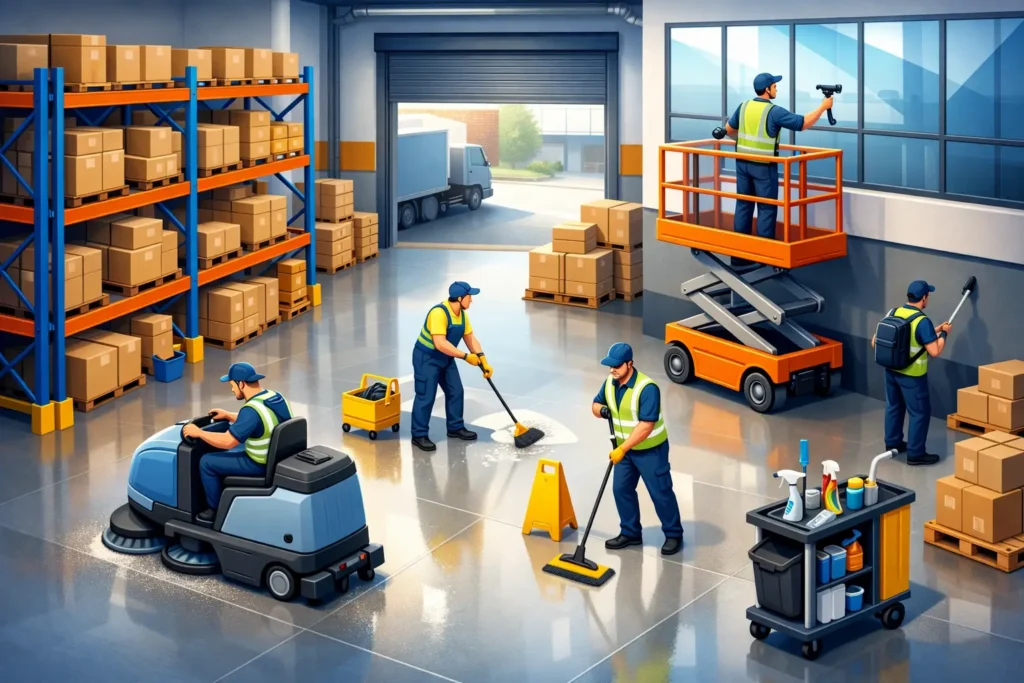
Warehouses, factories, and industrial offices
In industrial settings, front-of-house offices, meeting rooms, and staff areas often collect fine dust and heavy foot traffic from operational zones. Steam cleaning can be effective for lifting that build-up, while low-moisture methods may be useful where drying conditions are poor or access must resume quickly.
What about cost?
Businesses often ask which option is cheaper, but the better question is which delivers value over time.
Dry cleaning can appear more cost-effective because it is quicker and may reduce downtime. For routine maintenance, that can be true. But if it needs to be done more often to maintain standards, the long-term cost may not be lower.
Steam cleaning can cost more per visit depending on the site and scope, yet it may extend the life of carpets and reduce the need for repeated spot treatments. For commercial operators, the real cost includes labour disruption, presentation standards, replacement cycles, and whether the cleaning actually solves the issue.
A cheaper method is not cheaper if the carpet still smells tired, stains return, or your team is managing complaints a week later.
The material matters
Not every carpet or upholstered surface should be treated the same way. Fibre type, backing material, age, condition, and previous cleaning history all influence the right approach.
Some delicate materials respond better to low-moisture cleaning. Others can handle extraction well and benefit from it. Commercial carpet tiles, loop piles, and heavily used synthetic fibres often perform well with structured steam cleaning programs, but there is no one-size-fits-all rule.
This is where a professional assessment matters. The method should suit the surface, not just the booking schedule.
A better commercial approach is often both
For many businesses, the most effective answer to steam cleaning vs dry cleaning is not one or the other. It is a maintenance plan that uses both at the right time.
Dry cleaning can help maintain appearance between deeper services. Steam cleaning can be scheduled periodically to remove embedded soil, reset the condition of the carpet, and address hygiene concerns. That balance gives you better presentation without unnecessary disruption.
This is often the most practical option for busy commercial sites across South-East Melbourne, where facilities need to stay presentable, safe, and operational without constant cleaning interruptions.
If your current cleaning approach is based on habit rather than results, it is worth reviewing. A method that matches your traffic, flooring, and operating hours will usually perform better and cost less over the life of the asset.
The right cleaning method should make your site easier to manage, not add another problem to chase.