

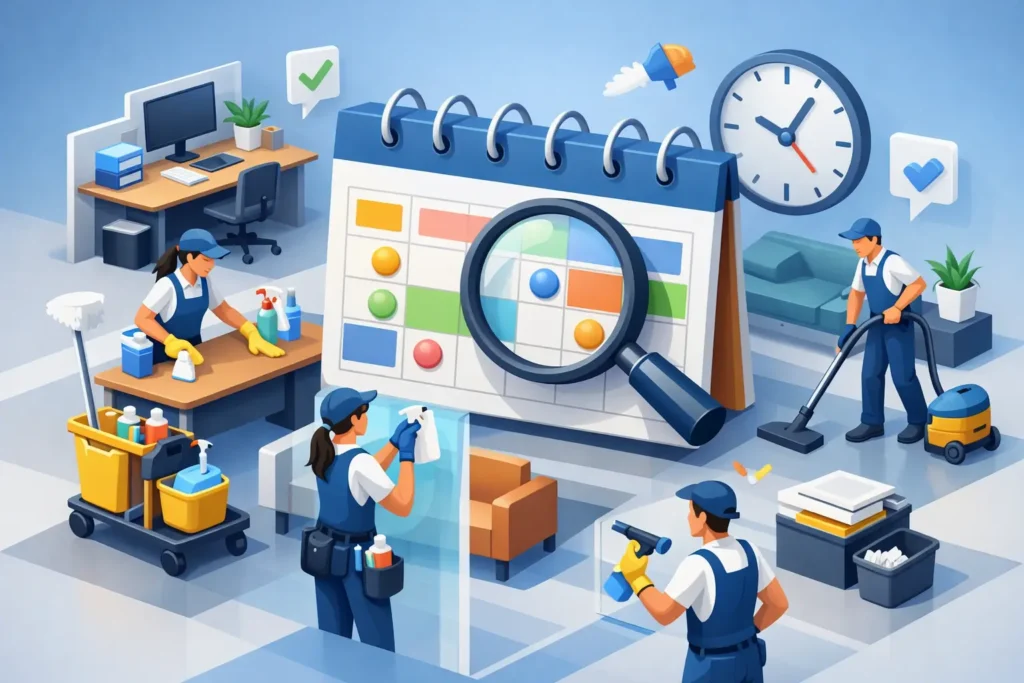
If your site looks tidy at a glance but still feels grimy, that is usually the point where people start asking what is included in deep cleaning. The short answer is this: deep cleaning goes beyond routine presentation and targets built-up dirt, bacteria, dust, grease and neglected areas that standard cleaning often misses.
For commercial sites, that difference matters. A regular clean keeps a workplace presentable day to day. A deep clean resets the environment. It lifts the standard in a way staff notice, customers notice, and compliance-sensitive industries often require.
What is included in deep cleaning for a commercial site?
Deep cleaning is not just “more cleaning”. It is a detailed service designed to reach areas that are not usually covered in a standard schedule, or not covered as thoroughly. The exact scope depends on the building type, foot traffic, industry requirements and the current condition of the site.
In most commercial environments, deep cleaning includes detailed attention to surfaces, fixtures, flooring, corners, edges, high-touch points and hard-to-reach areas. It often involves removing built-up grime rather than simply wiping over it. That distinction is important. A surface can look acceptable but still hold residue, bacteria or dust that affects hygiene, air quality and overall presentation.
Stop chasing cleaners. Start getting consistent results. ━━━━━━━━━━━━━━━━━━━━━━━
The difference between regular cleaning and deep cleaning
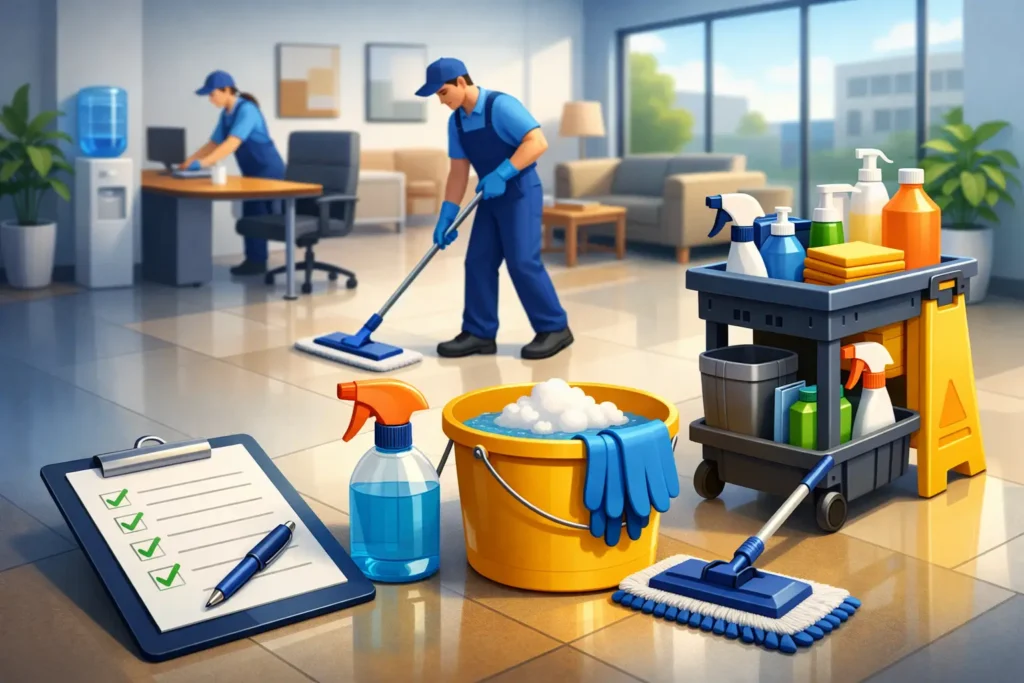
Routine commercial cleaning is built for consistency. It covers the essentials needed to keep a business operational and presentable, such as vacuuming, mopping, emptying bins, wiping obvious surfaces and cleaning bathrooms and kitchens. It is efficient by design, because it needs to be repeated frequently.
Deep cleaning is more intensive. It takes longer, covers more detail, and usually requires stronger processes, more equipment or specialised products. It is often scheduled periodically rather than daily or weekly.
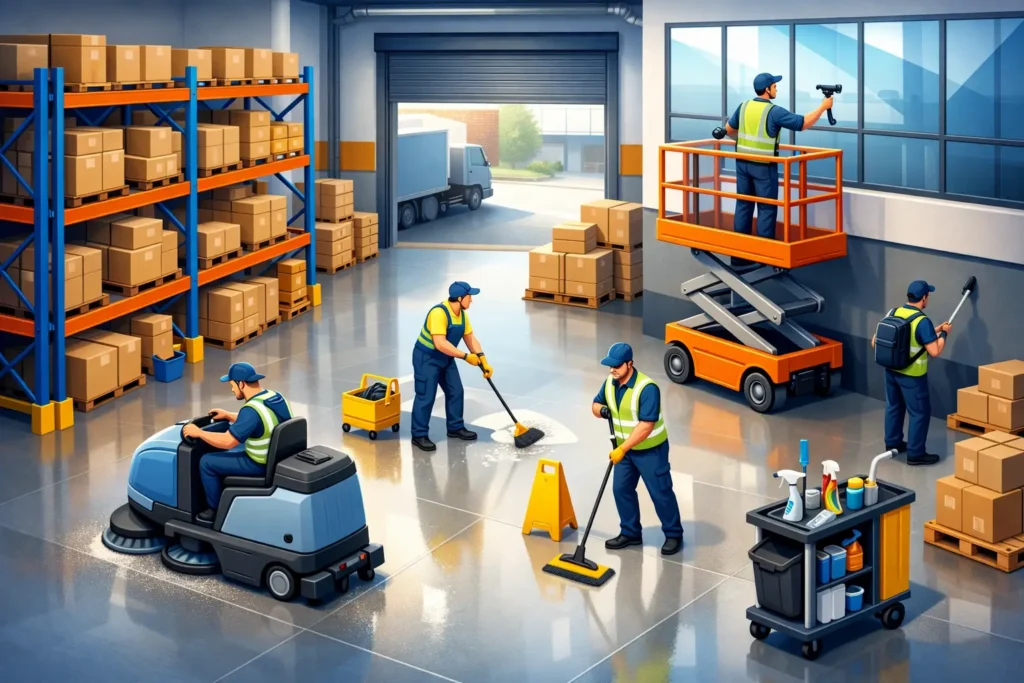
That does not mean every business needs a deep clean at the same frequency. A medical clinic, childcare centre or busy hospitality venue may need it far more often than a low-traffic office. A warehouse with heavy dust load has different requirements again. The right schedule depends on use, risk and standard expected.
What is included in deep cleaning by area?
The easiest way to understand deep cleaning is to break it down by zone.
Work areas and shared spaces
In offices, receptions and general work areas, deep cleaning usually covers much more than desktops and floors. Attention is given to light switches, door handles, partitions, internal windows, window sills, skirting boards, chair legs, table bases and other points where dust and grime collect slowly over time.
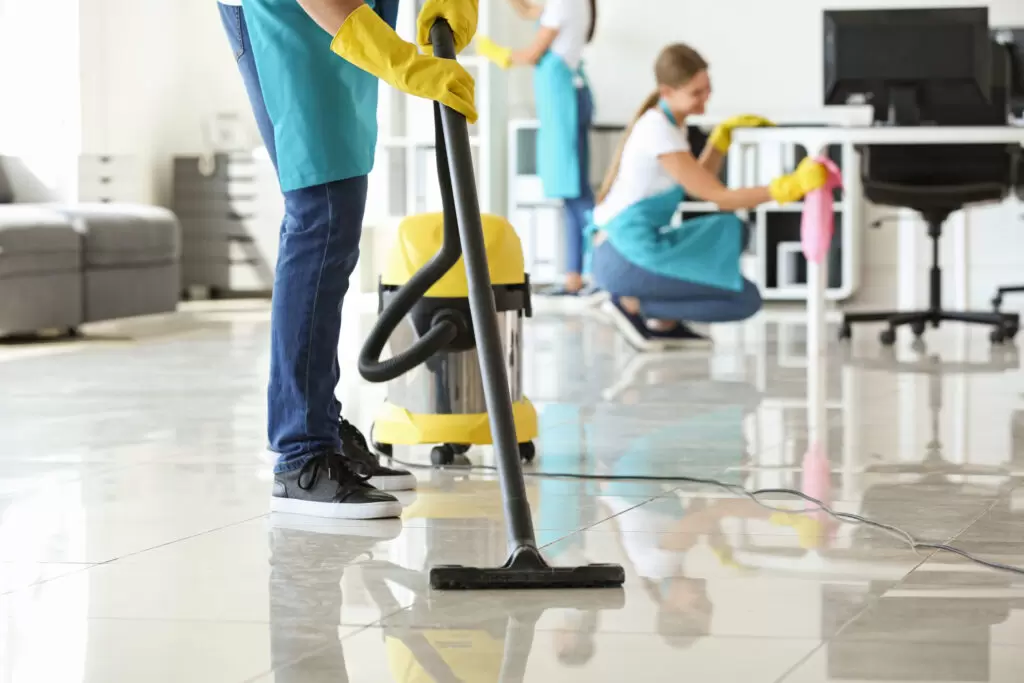
Fabric seating may need steam cleaning. Hard floors may need machine scrubbing rather than a standard mop. Carpets may need a deep extraction clean to remove embedded dirt, stains and odours. Dusting is also more thorough, including higher surfaces that standard cleaning may not address on every visit.
Kitchens and staff break rooms
This is one of the most common problem areas in commercial properties. A kitchen can appear clean while grease and food residue continue to build on splashbacks, cupboard fronts, tiles, grout lines, sink areas and around appliances.
A deep clean usually includes detailed cleaning of sinks, taps, benches, cupboard exteriors, appliance surfaces, handles and surrounding wall areas. Depending on scope, it can also include internal microwave cleaning, fridge detailing and the removal of grease from overlooked surfaces. In hospitality settings, the standard is naturally higher and more specialised.
Bathrooms and amenities
Washrooms need more than a quick daily refresh. Deep cleaning focuses on sanitising and detailing toilets, urinals, sinks, taps, partitions, dispensers, tiles, grout and floors. It also addresses the edges, corners and fittings where residue, soap scum and bacteria tend to remain.
In commercial sites with heavy staff or public use, amenities often show wear first. Deep cleaning helps restore hygiene standards and presentation, particularly where routine cleaning has become more maintenance than reset.
Floors and floor edges
Floors take the most visible wear, but the issue is not always on the surface. Deep cleaning often includes machine scrubbing for hard floors, pressure-based methods where appropriate, carpet steam cleaning and detailed edge work along skirting boards and corners.
This matters because routine mopping and vacuuming can only do so much. Once dirt is embedded or grease has built up, basic cleaning stops delivering the result a business expects. Deep floor care is often one of the clearest improvements clients notice after a proper deep clean.
High-touch and high-risk surfaces
Deep cleaning usually gives extra focus to the points people touch constantly but often clean lightly – door handles, push plates, switches, handrails, lift buttons, taps, reception counters, shared equipment and amenity fixtures.
In workplaces where hygiene directly affects staff wellbeing or customer confidence, these surfaces should never be treated as an afterthought. Deep cleaning improves the standard of sanitisation and reduces the chance that contamination is being spread across the site.
Hard-to-reach and neglected areas
This is where deep cleaning earns its value. Behind furniture, under fixtures, around edges, on vents, above cupboards, behind toilets and in low-visibility corners, dirt quietly builds up. These are the spaces most likely to be missed during routine cleaning because they are time-consuming, obstructed or outside the regular scope.
A proper deep clean targets these areas deliberately. That is often the difference between a site that simply looks acceptable and one that feels genuinely clean.
Why businesses usually book a deep clean
Most commercial clients do not request a deep clean for cosmetic reasons alone. Usually, there is a practical trigger.
Sometimes standards have slipped after inconsistent service or staff changes. Sometimes a business is preparing for an audit, inspection or important client visit. In other cases, there has been a fit-out, busy seasonal period, illness event or tenancy change that leaves the site needing more than normal maintenance.
Deep cleaning is also a smart reset for sites moving onto a new cleaning contract. If the condition has drifted over time, starting with a deep clean creates a cleaner baseline and makes routine maintenance more effective afterwards. That saves frustration on both sides.
What deep cleaning does not always include
This is where clear scope matters. Deep cleaning is detailed, but it is not automatically every specialist task rolled into one service.
For example, external pressure washing, high-access work, mould remediation, biohazard treatment, full pest-related cleaning or heavy industrial degreasing may require separate planning, equipment or compliance controls. The same applies to some upholstery work, ceiling cleaning or large-scale strip-and-seal floor treatments.
That is why businesses should avoid assuming what is covered. A professional provider should define exactly what is included, how the work will be completed and what outcomes to expect.
How to tell if your site needs a deep clean
Usually, the signs are obvious once you know what to look for. Bathrooms still smell after cleaning. Floor edges stay dark. Dust returns quickly. Glass looks smeared, kitchens feel sticky, and staff notice the workplace is “clean enough” but not actually clean.
There are also less visible signs. Allergy complaints, recurring grime in the same areas, poor first impressions and the need for cleaners to spend too much time on catch-up work all suggest that routine cleaning is carrying too much load. A deep clean can correct that.
The real value of deep cleaning
For a business, the value is not just a nicer-looking site. It is better hygiene, stronger presentation, easier maintenance and fewer issues caused by neglected build-up. It can also extend the life of flooring, fittings and shared spaces by removing substances that cause wear over time.
Just as importantly, it reduces management effort. When a workplace has been properly reset, routine cleaning becomes more consistent and more predictable. That matters for office managers, facility leads and operators who do not have time to keep chasing the same cleaning issues.
For businesses across high-traffic commercial and industrial environments, that is where a structured provider makes a difference. A company like NovaOne Property Services approaches deep cleaning as part of operational performance, not just presentation, which is exactly how commercial clients tend to measure value.
If you are reviewing your current standards, the most useful question is not whether your site gets cleaned regularly. It is whether the cleaning is detailed enough to keep the site under control, not just looking passable between problems.