
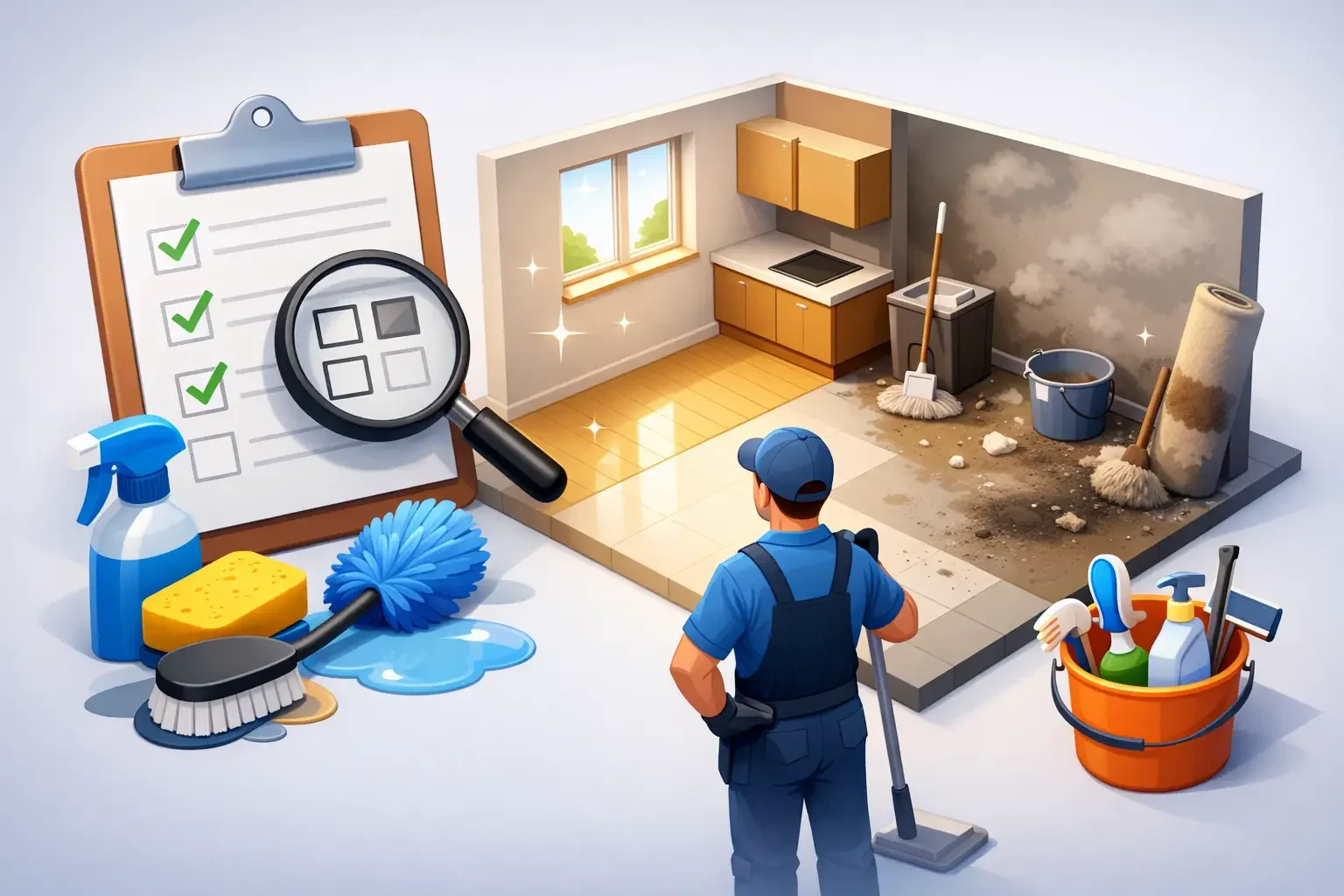
You can mop the floors, scrub the bathrooms, and wipe the kitchen, but still lose part of your bond because of small missed details. That is why a proper end of lease cleaning checklist matters.
The problem is usually not the obvious mess. It is the hidden dust, grease, marks, and build-up that agents, landlords, and property managers notice during the final inspection. A good end of lease clean should prepare the property for handover, not just make it look tidy for a few hours.
Why Standard Cleaning Is Not Enough
A weekly clean and an end of lease clean are not the same.
Regular cleaning keeps a home comfortable while you live there. End of lease cleaning is much more detailed. It focuses on built-up grime, hidden areas, fixtures, fittings, and inspection points that are often ignored during normal cleaning.
This is where many cleaners fall short. The kitchen bench may look clean, the floors may be vacuumed, and the bathroom may smell fresh, but the inspection can still fail if the skirting boards are dusty, the oven edges are greasy, or the window tracks are full of dirt.
If you are unsure about pricing, this guide explains how much end-of-lease cleaning costs and what can affect the final quote.
1. Light Switches, Power Points, and Door Handles
These small areas are touched every day, but they are often missed during cleaning.
Light switches, power points, and door handles collect fingerprints, grease, dust, and marks over time. They are especially noticeable around kitchens, bathrooms, bedrooms, and entry areas.
A proper vacate clean should include wiping and sanitising these touchpoints, not just cleaning the main surfaces.
2. Skirting Boards and Door Frames
Skirting boards are one of the most common areas cleaners miss. They collect dust, pet hair, scuff marks, and dirt along the edges of each room.
Door frames also collect grime where hands brush against them. If the walls and floors are clean but the skirting boards are dusty, the property can still look neglected.
These small details are one reason a cheap cleaning service can become expensive later. This article on cheap end of lease cleaning in Melbourne explains why low quotes can sometimes miss important work.
3. Window Tracks and Inside Window Edges
Window glass may get cleaned, but window tracks are often forgotten.
Tracks can collect dirt, dead insects, dust, mould spots, and debris. During final inspections, property managers often check these areas because they clearly show whether the clean was detailed or rushed.
Inside window edges and frames should also be wiped properly, especially in homes near roads, construction areas, or dusty outdoor spaces.
4. Exhaust Fans, Vents, and Rangehood Filters
Bathroom exhaust fans, laundry vents, and kitchen rangehood filters are easy to miss but very important.
Bathroom fans collect dust and can make a clean room look unfinished. Rangehood filters often hold grease even when the outside of the rangehood looks clean.
A good cleaner should check vents and filters as part of the end of lease cleaning process. If these are skipped, the agent may request a re-clean.
5. Tops of Cupboards, Wardrobes, and Shelves
Anything above eye level is often forgotten.
Kitchen cupboards, wardrobe shelves, tall storage units, and high ledges can collect a thick layer of dust. These areas become more visible once the property is empty and furniture has been removed.
A careful cleaner should check high surfaces, not just the areas that are easy to reach.
6. Appliance Edges, Seals, and Hidden Surfaces
Most tenants know the oven needs cleaning, but not every oven clean is detailed enough.
Grease can sit around rubber seals, tray supports, the inner door edge, and hard-to-reach corners. Dishwashers, washing machine cavities, splashback corners, drip trays, and the underside of overhead cupboards can also be missed.
These areas matter because they show whether the kitchen was properly cleaned or only wiped on the surface.
7. Wall Marks and Spot Cleaning
Not every wall mark can be removed, and fair wear and tear still applies. However, many fingerprints, minor scuffs, and splash marks can be reduced with the right method.
The key is care. Scrubbing too hard can damage paint, which may create a bigger problem. A professional cleaner should know when to gently spot clean and when a mark should be left or documented.
If small maintenance issues are building up across the property, this guide on 5 signs your property needs professional maintenance now may also help.
8. Bathroom Details Beyond the Basics
Most cleaners will clean the toilet, sink, mirror, and shower screen. The missed areas are usually smaller details.
These include grout lines, tap bases, behind the toilet, silicone edges, shower rails, soap holders, drains, and the underside of vanities.
Hard water marks, soap scum, and mould need more than a quick wipe. They often need the right product, extra time, and proper attention.
9. Floors Under Appliances and Furniture Lines
Once the property is empty, hidden floor areas become visible.
Dust, stains, pet hair, and dirt can appear under fridges, beds, lounges, and furniture lines. If the cleaner only focuses on open walkways, these areas may be missed during the final inspection.
For carpets, a normal vacuum may not be enough if there are odours, traffic marks, stains, or pet hair trapped in the fibres. If your lease requires steam cleaning, confirm this before booking.
10. Outdoor Areas, Garages, and Entry Paths
Many tenants focus only on the inside of the property, but outdoor areas can also affect the inspection.
Courtyards, balconies, entry paths, bins, garages, and cobwebs around exterior corners are commonly missed. If these areas were included in the tenancy, they may need to be cleaned before handover.
For commercial or larger property cleaning needs, NovaOne also provides support such as same-day factory cleaning in Dandenong and broader property care services.
A Cleaner Checklist Is Not Always the Same as an Agent Checklist
One common mistake is assuming every cleaning checklist is the same.
A cleaner may follow a basic internal checklist, while the property manager may inspect the property using a more detailed vacate checklist. This gap can create problems after the clean.
For example, blinds, balcony sweeping, garage cobwebs, internal windows, or appliance details may not be included unless clearly discussed before the job starts.
That is why tenants should always ask what is included before booking.
What to Check Before Handing Back the Keys
Before returning the keys, inspect the property once it is empty and again after the clean.
Check the kitchen, bathrooms, windows, skirting boards, cupboards, floors, switches, handles, exhaust fans, and outdoor areas. Empty rooms reveal far more than furnished rooms.
If you are comparing cleaning providers, do not only compare price. Compare the full scope, inclusions, time allowed, and whether there is any re-clean support if the agent raises an issue.
This is also important for business and rental property owners who need reliable cleaning support. You can read more in this commercial cleaning Dandenong South guide, commercial cleaning Cranbourne guide, and office cleaning in Mulgrave guide.
Why Detail Matters More Than Speed
A fast clean can look good at first, but final inspections are detailed. Agents may open drawers, check fans, inspect blinds, look at appliance edges, and review areas that are easy to miss.
That is why end of lease cleaning should be methodical, not rushed.
NovaOne Property Services focuses on reliable, detailed property care that helps reduce stress for tenants, landlords, and property managers. You can learn more about the team here: NovaOne Property Services — your partner for stress-free property care in Melbourne.
Final Thoughts
End of lease cleaning is not just another clean. It is the clean that gets judged most closely.
Small missed details can lead to re-clean requests, delays, or bond concerns. A proper checklist helps make sure the property is cleaned carefully, presented well, and ready for final inspection.